Community Reviews
thenextgoodbook.com
Underground Railroad by Colson Whitehead
306 pages
What’s it about?
Colson Whitehead examines slavery in America through the eyes of Cora, a 16 or 17 year-old slave girl working on a plantation in Georgia. Her life is unfathomable. As Cora said, "There was an order of misery, misery tucked inside miseries, and you were meant to keep track." Cora eventually escapes using an actual underground railroad and we follow her journey through the course of the novel. Whitehead's writing has a magical bent to it and this lends itself well to telling Cora's tale. The novel goes back and forth in time and shows many different viewpoints, from the slave catcher to those that are hunted.
What did it make me think about?
I can't imagine anyone reading this novel and not feeling the horror of what people are capable of doing to each other.
Should I read it?
Yes. Somehow Whitehead's use of magical realism lends itself to this story in a way that makes the novel both powerful and unique.
Quote-
"If niggers were supposed to have their freedom, they wouldn't be in chains. If the red man was supposed to keep hold of his land, it'd still be his. If the white man wasn't destined to take this new world, he wouldn't own it now.
Here was the true great spirit, the divine thread connecting all human endeavor- if you can keep it, it is yours. Your property, slave or continent. The American imperative. "
If you like this try-
The Turner House by Angela Flournoy
The Book of Aron by Jim Shepard
Americanah by Chimamanda Ngozi Adichie
Ruby by Cynthia Bond
Underground Railroad by Colson Whitehead
306 pages
What’s it about?
Colson Whitehead examines slavery in America through the eyes of Cora, a 16 or 17 year-old slave girl working on a plantation in Georgia. Her life is unfathomable. As Cora said, "There was an order of misery, misery tucked inside miseries, and you were meant to keep track." Cora eventually escapes using an actual underground railroad and we follow her journey through the course of the novel. Whitehead's writing has a magical bent to it and this lends itself well to telling Cora's tale. The novel goes back and forth in time and shows many different viewpoints, from the slave catcher to those that are hunted.
What did it make me think about?
I can't imagine anyone reading this novel and not feeling the horror of what people are capable of doing to each other.
Should I read it?
Yes. Somehow Whitehead's use of magical realism lends itself to this story in a way that makes the novel both powerful and unique.
Quote-
"If niggers were supposed to have their freedom, they wouldn't be in chains. If the red man was supposed to keep hold of his land, it'd still be his. If the white man wasn't destined to take this new world, he wouldn't own it now.
Here was the true great spirit, the divine thread connecting all human endeavor- if you can keep it, it is yours. Your property, slave or continent. The American imperative. "
If you like this try-
The Turner House by Angela Flournoy
The Book of Aron by Jim Shepard
Americanah by Chimamanda Ngozi Adichie
Ruby by Cynthia Bond

*Mild Spoilers*
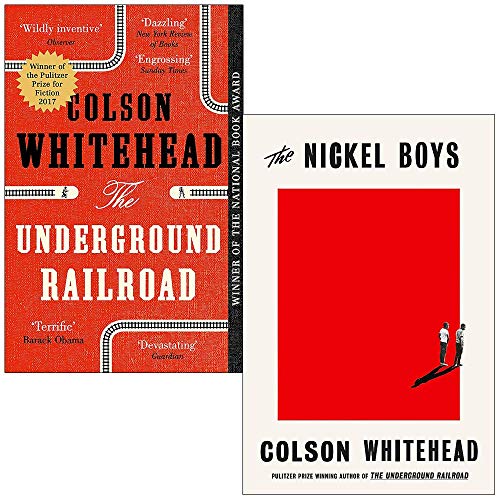
The Underground Railroad by Colson Whitehead. The protagonist is Cora, who has faced the horrors of slavery and has a love/hate relationship and connection to her mother, who escaped and left her behind as a child. The central arc of the story is that the Underground Railroad is just that, a physical network of stations, conductors, and safe houses. One of the greatest things about magical realism here is making the unknown and abstract feel real.
At first you think this is going to be a love story, and oh my god, it’s not. I was happy about that. What it is instead is a journey of survival: they escape on the Underground Railroad, but how? What does that journey feel like? It is the pain of losing or being taken away from people and places you love, either through being sold off or through sudden violence. There’s a lot of that in this book. It reminded me of what’s happening at the border right now with ICE raids and kidnappings, and how the Underground Railroad would be used today. There’s even a hint of the Sam Cooke song “A Change Is Gonna Come,” that line I’ve been running ever since. That captures the real danger and paranoia Cora experiences, whether it’s the fear of being caught or even knowing that if she does become a free Black person she could still be captured and sent back into slavery.
I had to put this book down twice. No spoilers, but subjects like eugenics, forced sterilization, and the barbaric history of the study of obstetrics and gynecology were heavy. There is also a claustrophobic Harriet Jacobs–type section. I lost track of how long it lasted, which is exactly what the character does. Cora has to hide in a crawl space attic with only a peephole to the outside world. That peephole is her only connection, her biggest connection, and through it she becomes a forced witness to a horrible act of violence. You feel the claustrophobia right along with her.
The last third of the book slowed down, and by that point I was tired physically and mentally. So I switched to the audiobook. I’m usually not too critical of adaptations, and Amazon Prime has a series based on the book, but for me it’s like the Harry Potter books and movies — I treat them as separate universes. The novel itself is well written. Whitehead creates this blend of historical fiction and speculative fiction. If the Underground Railroad had been a physical underground system with trains transporting people to freedom, what would that have looked like? That’s the only piece of magical realism, because the rest of the world is painfully real.
I gave the book four out of five stars, mostly because of that last third. It dragged a little, but slow doesn’t mean boring. The slowdown actually gives space to sit with the ugliness of slavery, prejudice, and racial violence. It zooms in, showing you what’s normalized as everyday life. And the whole time you’re reading, you’re on this nonstop whirlwind with Cora. From the plantation to her escape, disguises, hiding in attics, almost being caught — you want to know if she’s going to make it. Her mother made it but never came back for her. Will Cora get there? That is what keeps you tethered to her.
I was satisfied with the ending. It felt realistic, which is wild given that this is speculative fiction. And honestly, I would love to get a sequel. There’s enough richness in these characters to go deeper: Cora’s mother, other enslaved people on the plantation, even Cora herself. And then there’s the slave catcher, who is one of the most frightening characters I’ve read. Not because he rants with hatred, but because of his detachment. He’s racist, yes, but in his mind this is just the way of the world. This is his position in society, his way to eat. He doesn’t even see Black people as human, but as objects within the system. That coldness, that casual psychopathy, is terrifying.
What makes the book bone-chilling is the normalization of violence. The lynchings are treated like celebrations. People gathered as if for a barbecue, a picnic, a party. Children are there, cheering. Families laugh as Black bodies are burned and broken, and even white people who tried to help them are tortured and killed. There are postcards from these lynchings that prove this history. It was entertainment. That is macabre beyond words. Like Cora at her peephole, you can’t look away.
For me, this ranks third among fiction I’ve read about slavery. That’s all due to the writing. Colson Whitehead translates emotion into language with precision and weight. He knows what he’s doing. The Underground Railroad is brutal, immersive, and unforgettable.
The Underground Railroad by Colson Whitehead. The protagonist is Cora, who has faced the horrors of slavery and has a love/hate relationship and connection to her mother, who escaped and left her behind as a child. The central arc of the story is that the Underground Railroad is just that, a physical network of stations, conductors, and safe houses. One of the greatest things about magical realism here is making the unknown and abstract feel real.
At first you think this is going to be a love story, and oh my god, it’s not. I was happy about that. What it is instead is a journey of survival: they escape on the Underground Railroad, but how? What does that journey feel like? It is the pain of losing or being taken away from people and places you love, either through being sold off or through sudden violence. There’s a lot of that in this book. It reminded me of what’s happening at the border right now with ICE raids and kidnappings, and how the Underground Railroad would be used today. There’s even a hint of the Sam Cooke song “A Change Is Gonna Come,” that line I’ve been running ever since. That captures the real danger and paranoia Cora experiences, whether it’s the fear of being caught or even knowing that if she does become a free Black person she could still be captured and sent back into slavery.
I had to put this book down twice. No spoilers, but subjects like eugenics, forced sterilization, and the barbaric history of the study of obstetrics and gynecology were heavy. There is also a claustrophobic Harriet Jacobs–type section. I lost track of how long it lasted, which is exactly what the character does. Cora has to hide in a crawl space attic with only a peephole to the outside world. That peephole is her only connection, her biggest connection, and through it she becomes a forced witness to a horrible act of violence. You feel the claustrophobia right along with her.
The last third of the book slowed down, and by that point I was tired physically and mentally. So I switched to the audiobook. I’m usually not too critical of adaptations, and Amazon Prime has a series based on the book, but for me it’s like the Harry Potter books and movies — I treat them as separate universes. The novel itself is well written. Whitehead creates this blend of historical fiction and speculative fiction. If the Underground Railroad had been a physical underground system with trains transporting people to freedom, what would that have looked like? That’s the only piece of magical realism, because the rest of the world is painfully real.
I gave the book four out of five stars, mostly because of that last third. It dragged a little, but slow doesn’t mean boring. The slowdown actually gives space to sit with the ugliness of slavery, prejudice, and racial violence. It zooms in, showing you what’s normalized as everyday life. And the whole time you’re reading, you’re on this nonstop whirlwind with Cora. From the plantation to her escape, disguises, hiding in attics, almost being caught — you want to know if she’s going to make it. Her mother made it but never came back for her. Will Cora get there? That is what keeps you tethered to her.
I was satisfied with the ending. It felt realistic, which is wild given that this is speculative fiction. And honestly, I would love to get a sequel. There’s enough richness in these characters to go deeper: Cora’s mother, other enslaved people on the plantation, even Cora herself. And then there’s the slave catcher, who is one of the most frightening characters I’ve read. Not because he rants with hatred, but because of his detachment. He’s racist, yes, but in his mind this is just the way of the world. This is his position in society, his way to eat. He doesn’t even see Black people as human, but as objects within the system. That coldness, that casual psychopathy, is terrifying.
What makes the book bone-chilling is the normalization of violence. The lynchings are treated like celebrations. People gathered as if for a barbecue, a picnic, a party. Children are there, cheering. Families laugh as Black bodies are burned and broken, and even white people who tried to help them are tortured and killed. There are postcards from these lynchings that prove this history. It was entertainment. That is macabre beyond words. Like Cora at her peephole, you can’t look away.
For me, this ranks third among fiction I’ve read about slavery. That’s all due to the writing. Colson Whitehead translates emotion into language with precision and weight. He knows what he’s doing. The Underground Railroad is brutal, immersive, and unforgettable.
See why thousands of readers are using Bookclubs to stay connected.