The State of Affairs: Rethinking Infidelity – A Guide to Confronting Infidelity from the Bestselling Author of Mating in Captivity
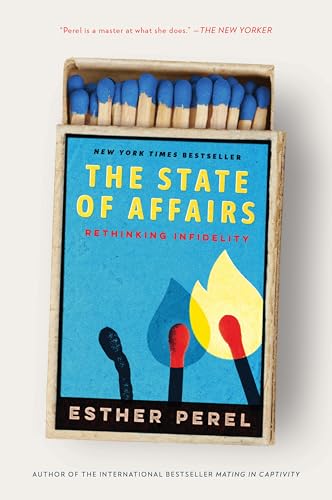
“Perel is a master at what she does.” ―The New Yorker
“[Perel] knows the depth of your shame and the vibrancy of your lust.”- The New York Times
From iconic couples’ therapist and bestselling author of Mating in Captivity comes a provocative and controversial look at infidelity with practical, honest, and empathetic advice for how to move beyond it.
An affair can rob a couple of their relationship, their happiness, their very identity. And yet, this extremely common human experience―universally forbidden yet universally practiced―is poorly understood.
- Why do people cheat―even those in happy marriages?
- Why does an affair hurt so much? Do our romantic expectations of marriage set us up for betrayal?
- Is there such a thing as an affair-proof marriage? Is it possible to love more than one person at once?
- Can an affair ever help a marriage?
For a decade, psychotherapist and New York Times bestselling author Esther Perel traveled the globe and worked with hundreds of couples who have grappled with cheating. In this illuminating book, she weaves real-life case stories with incisive psychological and cultural analysis to provide insights and answers to help couples survive and thrive.
Betrayal hurts, but it can be healed. An affair can even be the doorway to a new marriage―with the same person. Affairs, Perel argues, have a lot to teach us about modern relationships―what we expect, what we think we want, and what we feel entitled to. They offer a unique window into our personal and cultural attitudes about love, lust, and commitment. Through examining illicit love from multiple angles, Perel invites readers into an honest, enlightened, and entertaining exploration of modern relationships in its many variations.
“Esther Perel is widely recognized as the world’s leading expert on marriage.”- Sunday Times Style
“A fresh look at infidelity.” - Los Angeles Review of Books
“Perel―a whip-smart emotional savant who pierces through human defenses with the efficiency of a surgeon―is a wonder to behold.”- Huffington Post
“She doesn’t peddle in bromides or offer a shoulder to cry on―she’s too busy trying to shake you to your senses, insisting on your agency, your vitality, and your complicity in what happens in your marriage.” - The New York Times
“[The State of Affairs] explores a vast landscape of the adulterous terrain . . . in a way that’s deeply humane and never preachy.” - NPR
BUY THE BOOK
Community Reviews

This book is not what I thought it would be on understanding and navigating through the evolution of monogamy and poly-amourous relationships. The author feels there is a difference between infidelity and relationship types as you can have infidelity in poly-amourous relationships. It seems to be more about the acceptance and change in shift for infidelity as the long term partners in their post-discovery of "cheating" experiences. I found the author to go into a deep dive into why a person would 'cheat' from the insecurity, the lack of desire/attention, the thrill of secrecy and the overall shame of the occurrences but never explore the honest conversations that were needed beforehand on perhaps the discussion of beliefs and idea of an open relationships and the boundaries involved. With the mentality that cheating is adventurous and relationships are more on the base of different needs from each other, this book seems to be more about shaming the parties who were 'cheated' on for shaming the 'cheating' parties on their behaviors and the disbelief that monogamy is still possible. Declaring monogamy the need to control one another and deny a truly happy future for one another, it makes me question what the author truly thinks of the definition of love is and what the true partnership and their roles among each other. I would not suggest this book except if you have been cheated on and are looking for a better understanding of your partner and how to overcome the obstacle but to warn you there is no acknowledgement of the emotional manipulation that is involved. The concept of trust to the author should be a confident relationship to the unknown and should be refrained as a leap of faith to the act of the engagement with the unpredictable.
See why thousands of readers are using Bookclubs to stay connected.