We Love You, Bunny: A Novel
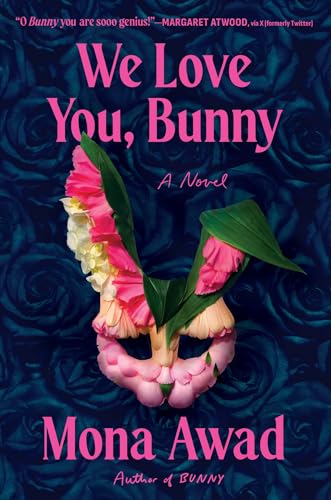
A NEW YORK TIMES, USA TODAY, and LOS ANGELES TIMES BESTSELLER
A FINALIST FOR THE GILLER PRIZE
Named a Must-Read Pick by The New York Times, Oprah Daily, People, Associated Press, Marie Claire, Bustle, The Boston Globe, Goodreads, Women’s Wear Daily, and more
The highly anticipated follow-up to the viral sensation Bunny, a brilliantly written and delirious literary horror novel set in the Bunny-verse—a world that Margaret Atwood declared “soooo genius.”
In the cult classic novel Bunny, Samantha Heather Mackey was first ostracized and then seduced by a clique of creepy-sweet rich girls in her New England MFA program who call themselves “Bunny.” An invitation to the Bunnies’ Smut Salon leads Samantha down a dark rabbit hole (pun intended) into the violently surreal world of their off-campus workshops.
When We Love You, Bunny opens, Sam has just published her first novel to critical acclaim. But at a New England stop on her book tour, her one-time frenemies, furious at the way they’ve been portrayed, kidnap her. Now a captive audience, it’s her (and our) turn to hear the Bunnies’ side of the story in this “dark, twisted satire of academia” (The New York Times).
We Love You, Bunny is both a prequel and a sequel, and a darkly comic and totally complete stand-alone novel that “feels like Han Kang’s The Vegetarian meets the 80s film Heathers” (People).
BUY THE BOOK
Community Reviews

We Love You, Bunny by Mona Awad somehow manages to dial the chaos up past my comfort zone. This book is dark academia by way of fever dream, slasher story, and literary satire all tangled together. The result is a story that is undeniably bold, and at times very confusing.
The novel returns readers to the eerie orbit of the Bunnies. The Bunnies are the clique of creepy-sweet MFA students whose creative workshops blur the line between art and something far more disturbing. When the story begins, Samantha Mackey has already written a successful novel inspired by her time with them. The Bunnies, furious about how they were portrayed, kidnap her during a book tour, and decide it is their turn to tell the story. What follows is their version of events including the discovery of their bizarre creative powers and the unsettling origin of their first creation. That creation is Aerius. A rabbit that the Bunnies magically bring to life as a human.
From there, things spiral quickly. Aerius is treated less like a person and more like an experiment or possession. The girls obsess over him, fight for his attention, and discuss sleeping with him while he struggles with the strange reality of being human. Meanwhile, he grows increasingly unstable, trapped between his new consciousness and the memory of being a rabbit. By the time axes and bodies start appearing, the story has fully crossed into surreal horror territory.
Awad clearly leans into literary influences throughout the novel. The references to Edgar Allan Poe add an interesting layer of foreshadowing that hints early on that something violent and gothic is coming. The book also plays heavily with metafiction, eventually addressing the reader directly, and blurring the boundary between story and audience. It is ambitious and undeniably creative. Unfortunately, creativity alone does not always translate into clarity for stories.
Without having read the first book, much of the story felt disorienting. The narrative repeats certain beats over and over while the plot circles around the same mystery of who is committing the axe murders. Characters often behave in exaggerated, almost caricature-level ways. Which makes it difficult to connect with anyone in the story. By the time the novel reaches its final twist involving the manuscript and the reader themselves, the effect feels more bewildering than profound.
Awad deserves credit for committing fully to the bizarre. The novel explores themes of artistic creation, the pressure to belong, and the way people sometimes reshape themselves to fit into toxic social groups. Beneath the surreal horror and dark humor is a commentary about identity and the dangers of losing yourself inside someone else’s idea of community.
We Love You, Bunny feels like stepping into someone else’s strange dream. Intriguing at times and disturbing at others. I felt more confused than satisfied. You may find it fascinating if you enjoy experimental storytelling and surreal dark academia. If you prefer clear plots and grounded characters, you may finish the book wondering what exactly you just read.

I loved Bunny! And other novels by Mona Awad. But I sorta think this book is specifically geared towards readers who have any sort of MFA. I appreciated all the symbolism, allegory or whatever the right words are (not an English major or MFAhaha)...but this book was TOO LONG. It was too geared towards a very specific audience in my opinion. It was SO LONG. It made me wonder if this novel about a long game revenge story is just a long game revenge novel? I hope there's no #3 in this series. I love other Awad stories but I don't think the universe created in #1 warrants the world that was dragged into #2.
See why thousands of readers are using Bookclubs to stay connected.