The Uncensored Picture of Dorian Gray
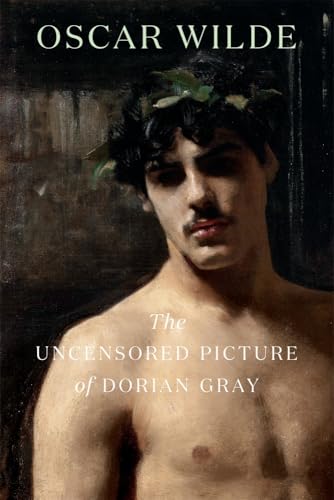
"Now, for the first time, we can read the version that Wilde intended...Both the text and Nicholas Frankel's introduction make for fascinating reading." --Paris Review More than 120 years after Oscar Wilde submitted The Picture of Dorian Gray for publication in Lippincott's Monthly Magazine, the uncensored version of his novel appears here for the first time in a paperback edition. This volume restores all of the material removed by the book's first editor. Upon receipt of the typescript, Wilde's editor panicked at what he saw. Contained within its pages was material he feared readers would find "offensive"--especially instances of explicit homosexual content. He proceeded to go through the typescript with his pencil, cleaning it up until he made it "acceptable to the most fastidious taste." Wilde did not see these changes until his novel appeared in print. Wilde's editor's concern was well placed. Even in its redacted form, the novel caused public outcry. The British press condemned it as "vulgar," "unclean," "poisonous," "discreditable," and "a sham." When Wilde later enlarged the novel for publication in book form, he responded to his critics by further toning down its "immoral" elements. Wilde famously said that The Picture of Dorian Gray "contains much of me" Basil Hallward is "what I think I am," Lord Henry "what the world thinks me," and "Dorian what I would like to be--in other ages, perhaps." Wilde's comment suggests a backward glance to a Greek or Dorian Age, but also a forward-looking view to a more permissive time than his own repressive Victorian era. By implication, Wilde would have preferred we read the uncensored version of his novel today.
BUY THE BOOK
Community Reviews
Sort of a re-read. I had read the expanded book-published version back around high school. I wanted to re-read and figured I would try this version out. I had skimmed briefly something which said that the original publication was censored from Wilde's typescript. But it turns out that that was just for when it was published in a magazine. Wilde then further edited and significantly expanded the story - by 7 chapters and I estimate around 50 pages. He changed the ending. He was actually way more specific about some of Dorian's sins - noting financial and drug crimes - in order to distract from the "explicit" sexual "crimes" of the original. I put these in scare quotes because by modern standards they are laughable. Firstly, nothing is even slightly explicit. The male characters talk about special friendships with each other, the worship of beauty in youth, and a romance "at once passionate and sterile" - all homosexual coded, but hardly "explicit" or "vulgar" to a modern reader. The only thing that could sort of qualify is when a woman is referred to as a mistress. In fact, the first time the narrator gives us anything like a list of specific sins it is really just a list of sensory experiences that Dorian pursues - music, gemstones, embroidery. It almost comes off as hilarious satire if you aren't aware of the aestheticist philosophical reasons for his inclusions of these lists, which are straight out of Pater. But the suggestion that Dorian is doing anything hideous or immoral feels laughable for a modern reader until you get to the last few chapters. The Victorians were some truly ridiculous people. They get all worked up about this while being perfectly fine with rampant poverty, orphans, corporal punishment, a travesty of a justice system, colonial violence and theft, pollution, corruption ... but let a rumor start about a woman's virtue or what people do in the privacy of their own homes with their private parts and there isn't a pearl unclutched.
On the other hand the philosophical discussions of the first few chapters combined with the final crimes of Dorian and the revelations in the final few chapters are really good. I'd say the tale really needs a modern update though.
On the other hand the philosophical discussions of the first few chapters combined with the final crimes of Dorian and the revelations in the final few chapters are really good. I'd say the tale really needs a modern update though.

I absolutely adore this! Oscar Wilde has such a witty, almost rhythmically lyrical way with his words. Reading them feels like he is playing with his words in such an entertaining manner that you just can't help but keep reading.
I love the power he gives to multiple art forms, especially painting. The interpretive subtext is a masterpiece too. I've never seen a theory of hedonism done the way Oscar Wilde does it—in a charming and penetrative way. It's poetic, complex, familiar, and strange.
I found my focus not overwhelmingly on themes of vanity, hypocrisy, beauty, etc., because the power of the portrait, the power of portraiture as a painting medium, was just so captivating. However, this is the type of book that, like the portrait, is moldable. I'm sure if I read this book again, I will be pulled to another topic of focus easily (probably depending on my mood), but that is the pure genius of this book.
I love the power he gives to multiple art forms, especially painting. The interpretive subtext is a masterpiece too. I've never seen a theory of hedonism done the way Oscar Wilde does it—in a charming and penetrative way. It's poetic, complex, familiar, and strange.
I found my focus not overwhelmingly on themes of vanity, hypocrisy, beauty, etc., because the power of the portrait, the power of portraiture as a painting medium, was just so captivating. However, this is the type of book that, like the portrait, is moldable. I'm sure if I read this book again, I will be pulled to another topic of focus easily (probably depending on my mood), but that is the pure genius of this book.
This was a classics book club pick. My husband and I listened to it and started with the new uncensored version. It was graphic and we didn’t finish. Then at book club our friends raved about the writing style and the quotes so we fast forwarded to the actual book and we listened. We did like it and didn’t have the same experience. It wasn’t as focused on homosexuality. It’s a story of beauty, morality & corruption.
See why thousands of readers are using Bookclubs to stay connected.