The Trial (Penguin Modern Classics)
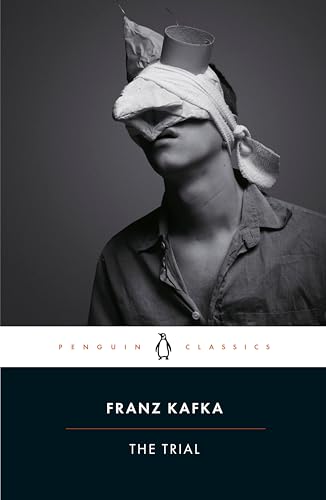
A brilliant translation of one of the greatest works of Franz Kafka, author of Metamorphosis, telling the haunting story of a man's desperate search for answers amid his prosecution for an unknown crime
A Penguin Classic
A terrifying psychological trip into the life of one Joseph K., an ordinary man who wakes up one day to find himself accused of a crime he did not commit, a crime whose nature is never revealed to him. Once arrested, he is released, but must report to court on a regular basis—an event that proves maddening, as nothing is ever resolved. As he grows more uncertain of his fate, his personal life—including work at a bank and his relations with his landlady and a young woman who lives next door—becomes increasingly unpredictable. As K. tries to gain control, he succeeds only in accelerating his own excruciating downward spiral.
Penguin Classics is the leading publisher of classic literature in the English-speaking world, representing a global bookshelf of the best works throughout history and across genres and disciplines. Readers trust the series to provide authoritative texts enhanced by introductions and notes by distinguished scholars and contemporary authors, as well as up-to-date translations by award-winning translators.
A Penguin Classic
A terrifying psychological trip into the life of one Joseph K., an ordinary man who wakes up one day to find himself accused of a crime he did not commit, a crime whose nature is never revealed to him. Once arrested, he is released, but must report to court on a regular basis—an event that proves maddening, as nothing is ever resolved. As he grows more uncertain of his fate, his personal life—including work at a bank and his relations with his landlady and a young woman who lives next door—becomes increasingly unpredictable. As K. tries to gain control, he succeeds only in accelerating his own excruciating downward spiral.
Penguin Classics is the leading publisher of classic literature in the English-speaking world, representing a global bookshelf of the best works throughout history and across genres and disciplines. Readers trust the series to provide authoritative texts enhanced by introductions and notes by distinguished scholars and contemporary authors, as well as up-to-date translations by award-winning translators.
BUY THE BOOK
Join a book club that is reading The Trial (Penguin Modern Classics)!
Community Reviews
A thorough indictment of legal bureaucracy run amok, and the inaccessibility of the courts to the average person, through the weird twilight-zone lens of Kafka.

A thorough indictment of legal bureaucracy run amok, and the inaccessibility of the courts to the average person, through the weird twilight-zone lens of Kafka.
This book is hard to rate or even review. First of all, we’re dealing with an unfinished work — full of fragments and uncertainties about what Kafka actually intended to do with it.
How can we even be sure that the ending is the ending? Now, I know, this story doesn't need an end, because it is a timeless topic and it's not its purpose to have an end. It only makes you hope that one day, maybe, the system will become fair.
As for the "story" itself :
For me, it felt a bit like Alice in Wonderland, except that here, K. (our “Alice”) quickly gives in to the absurd and lets himself drown in this surreal, dystopian, and nonsensical world.
It also reads almost like a manuscript for a play — and I’m quite sure that was intentional, meant to portray K.’s world as a vast tragicomedy, with every character exaggerated to the point of absurdity. There are a lot of references to the theater (the tenors, going to the theater with his uncle, being in the backstage of the procedural world, etc) that helps confirm my theory.
Going back to my Alice in Wonderland comparison, each person feels like one of those fantastical, unfathomable creatures from another realm, guiding (or misleading) K. through their strange domain.
Nobody felt real, no one because who is the system ? Does it need a face, a body...?
I would not go on and on about what the book is really about, other people did already, and surely better than I would, but being accused and the judged for just existing is something that a lot of people can relate to, and history shows us that we never learn our lessons.
As for the prose :
There are great, philosophical quotes here and there, you should keep in mind. If anything needs to live "rent free" in your head, please choose those phrases.
But one thing is certain: the prose is both heavy and childlike. I’m not sure whether that was intentional or not, but if anyone else had written this way, I’m pretty sure readers would have thrown the book at their face.
How can we even be sure that the ending is the ending? Now, I know, this story doesn't need an end, because it is a timeless topic and it's not its purpose to have an end. It only makes you hope that one day, maybe, the system will become fair.
As for the "story" itself :
For me, it felt a bit like Alice in Wonderland, except that here, K. (our “Alice”) quickly gives in to the absurd and lets himself drown in this surreal, dystopian, and nonsensical world.
It also reads almost like a manuscript for a play — and I’m quite sure that was intentional, meant to portray K.’s world as a vast tragicomedy, with every character exaggerated to the point of absurdity. There are a lot of references to the theater (the tenors, going to the theater with his uncle, being in the backstage of the procedural world, etc) that helps confirm my theory.
Going back to my Alice in Wonderland comparison, each person feels like one of those fantastical, unfathomable creatures from another realm, guiding (or misleading) K. through their strange domain.
Nobody felt real, no one because who is the system ? Does it need a face, a body...?
I would not go on and on about what the book is really about, other people did already, and surely better than I would, but being accused and the judged for just existing is something that a lot of people can relate to, and history shows us that we never learn our lessons.
As for the prose :
There are great, philosophical quotes here and there, you should keep in mind. If anything needs to live "rent free" in your head, please choose those phrases.
But one thing is certain: the prose is both heavy and childlike. I’m not sure whether that was intentional or not, but if anyone else had written this way, I’m pretty sure readers would have thrown the book at their face.
Re-read this for a book club. I liked it because I like pretty much everything Kafka so it was easy to go back and take this novel for a second spin.
I loved the darkness, the futility, the absurdity, the strangeness that is Kafka. If you love Kafka, you will definitely love this book.
I loved the darkness, the futility, the absurdity, the strangeness that is Kafka. If you love Kafka, you will definitely love this book.
See why thousands of readers are using Bookclubs to stay connected.