The Indigo Girl: A Novel
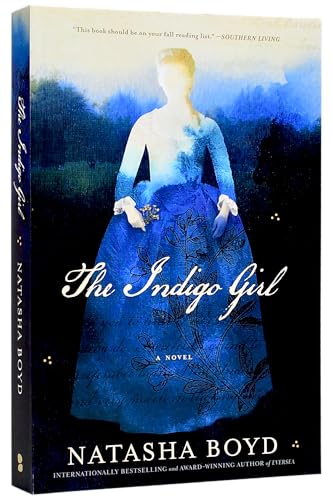
In this incredible story of ambition, betrayal, and sacrifice, an extraordinary sixteen-year-old girl in Colonial South Carolina defies all expectations to achieve her dream.
The year is 1739. Eliza Lucas is sixteen years old when her father leaves her in charge of their family's three plantations in rural South Carolina and then proceeds to bleed the estates dry in pursuit of his military ambitions. Tensions with the British, and with the Spanish in Florida, just a short way down the coast, are rising, and slaves are starting to become restless. Her mother wants nothing more than for their South Carolina endeavor to fail so they can go back to England. Soon her family is in danger of losing everything.
Upon hearing how much the French pay for indigo dye, Eliza believes it's the key to their salvation. But everyone tells her it's impossible, and no one will share the secret to making it. Thwarted at nearly every turn, even by her own family, Eliza finds that her only allies are an aging horticulturalist, an older and married gentleman lawyer, and a slave with whom she strikes a dangerous deal: teach her the intricate thousand-year-old secret process of making indigo dye and in return--against the laws of the day--she will teach the slaves to read.
So begins an incredible story of love, dangerous and hidden friendships, ambition, betrayal, and sacrifice.
Based on historical documents, including Eliza's letters, this is a historical fiction account of how a teenage girl produced indigo dye, which became one of the largest exports out of South Carolina, an export that laid the foundation for the incredible wealth of several Southern families who still live on today. Although largely overlooked by historians, the accomplishments of Eliza Lucas influenced the course of US history. When she passed away in 1793, President George Washington served as a pallbearer at her funeral.
This book is set between 1739 and 1744, with romance, intrigue, forbidden friendships, and political and financial threats weaving together to form the story of a remarkable young woman whose actions were before their time: the story of the indigo girl.
BUY THE BOOK
Community Reviews
What Bookclubbers are saying about this book
✨ Summarized by Bookclubs AI
Readers say this historical novel, rooted in Eliza Lucas’s real letters, is a compelling read about a 16-year-old woman who manages plantations and fi...
The Indigo Girl, a historical fiction, but mostly true was a very enjoyable read. It kept my interest through to the end. I thought it was well written and compelling. I think this book would appeal to readers of all ages. Natasha Boyd did base the book off of her historical research. I find the story to be mostly believable for the colonial period of our country’s history.

I have been meaning to read this book for years. Thank heavens a book club finally forced me to actually do it. This is a well done historical fiction of life in 1739 South Carolina. A sixteen year old daughter is tasked with managing several plantations when her father returns to Antigua to pursue his military ambitions and possibly the governorship. As would be expected, she meets with resistance - from both her mother and most of the local society. What makes the story truly fascinating is it’s basis in fact. Eliza Lucas existed and truly did seek to grow indigo. She does it with the help of one of her slaves, a local lawyer and a slave apprentice whom she grew up with before her father sold him off.
Boyd does a great job of painting a complete picture of time and place, especially the slave culture of a southern plantation. It was also interesting to see how early issues between the colonies and England had arisen. She’s done her research, helped by Eliza’s actual letters. I was glad she included enough details about the actual indigo making process. There’s a bit of a romantic overtone to this book, which always irritates me. Luckily, it’s not overdone. I felt for Eliza, trying to walk the thin line between being successful and being accepted by society. And my heart just went out to her when I saw who betrayed her.
Bravo to Ms. Boyd for introducing us to another historical female woman whose significance was in danger of being lost.
This was an interesting story of what became a huge industry in pre-Revolutionary War South Carolina. It tells the story of Eliza Lucas, who literally held down the plantations at the tender age of 16, while her father returned to the West Indies to buy his commission into the Spanish War, encumbering the family finances in the process. Eliza comes up with the genius idea to learn how to cultivate indigo, competing against the world’s gold standard, French indigo. And finds romance along the way with an older man, Charles Pinckney, who encourages her enterprise. Great retelling of a truly story.
This is the first book I've read by this author. I really liked her writing style: not too much detail, she kept the book in the present tense, and she focused on the central character instead of multiple voices. I did not know anything about this crop or the difficulty to process it for use. I liked that she didn't want to be forced into an arranged marriage as many women were for years after this. I also once managed my parent's farm and could relate to being thrust into that role.