The Griffin Sisters' Greatest Hits: A Heartfelt Sister Story about Love, Secrets, and Second Chances
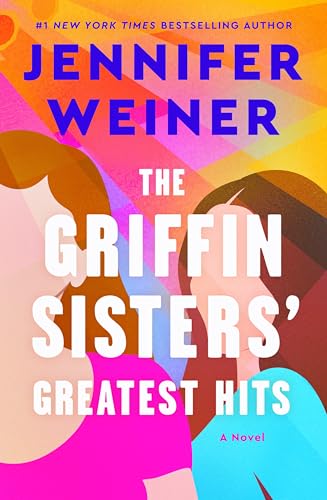
Order now to receive the stunning DELUXE LIMITED EDITION—only available on the first printing while supplies last! This collector’s hardcover features unique stenciled edges, specially illustrated endpapers, and a shiny stamped case.
A captivating family saga filled with heart, humor, secrets, and second chances, about two sisters’ incredible journey and a daughter’s quest to reunite her family, from the #1 New York Times bestselling author.
READERS ARE SAYING…
“A fun read that went by way too quickly.” –Reader Review, 5*****
“I couldn't put this book down, I just loved it.” –Reader review, 5*****
“One of my favorite books ever.” –Reader Review, 5*****
“Come for the drama, stay for the healing.” –Reader Review, 5*****
“I cried happy tears, sad tears, laughed out loud. . . all the things that make a 5 star book.” –Reader Review, 5*****
Cassie and Zoe Grossberg were once as dependent on each other as sisters could be, but it’s been two decades since they’ve spoken. As a pop sensation in their early twenties, the sisters experienced the ultimate highs of celebrity, until they were driven apart one terrible night. Now, in their early forties, Zoe is a suburban mom in New Jersey, and Cassie is living alone, off-grid in Alaska. In this story of estranged sisters, Zoe’s teenage daughter Cherry is desperate to bring the women back together—and unearth the truth behind their estrangement. As long-buried secrets surface, Cassie and Zoe are forced to confront their past choices and betrayals and decide whether they can be open to forgiveness and reclaiming the strength of their sisterhood.
Written with Jennifer Weiner’s signature humor and warm voice, The Griffin Sisters’ Greatest Hits is a fun, heartfelt, “shimmering story” (Woman’s World) about an emotional journey that celebrates the essence of family: the ties that bind, the events that shape us, and the love that, despite all odds, brings us back to each other. This is Jennifer Weiner at her absolute best.
BUY THE BOOK
Community Reviews

This story dives into the star-making pop music scene of the early 2000’s. Of a band with sisters at the center, Zoe and Cassie, who are discovered, sign with a label, and make it to the big time - only to have it implode on themselves amidst a classic love triangle with one of the songwriters/lead guitarists. The events that lead to that fateful night are still being reflected on 25 years later, with blame and estrangement, as well as regret. A rocking good read, especially with the back-story of the music industry itself. I did get really tired of the author dwelling so much on the physical ‘inferiority’ of Cassie, and equally, how great she was as a songwriter/vocalist. I feel the repeated references could have been cut down, and we could have had 20 fewer pages to read. But enjoyed the wrap-up as the story’s main characters reconcile and reconnect.
Bestselling author Jennifer Weiner published her first book, Good in Bed, in which the main character, Cannie Shapiro, struggles to make peace with her plus-size body, in 2001. At that time, it was rare to encounter a plus-size female character in a work of contemporary fiction. Weiner recalls the “bad old days” when “fat characters were comic relief, or they were on their way to being thin characters. They were the ‘before’ and ‘after’ ads.” But Weiner “wanted to write a story where the big girl stayed big and still got all the wonderful things.” Today, plus-sized characters are “seen as a much more acceptable, normal thing” and that encourages Weiner and makes her “happy.” She observes that today an entire generation of adult women have no awareness or appreciation of what a challenge it was to get Good in Bed published.
Inspiration for Weiner’s twentieth novel, The Griffin Sisters’ Greatest Hits, struck when she was vacationing in Alaska. She imagined a woman living there. Wearing an oversized parka, carrying cleaning supplies, she wondered who the woman was, how she ended up in Alaska, who she might be running from, and “who she used to be.” She had wanted for a long time to write a book about the music industry and while conducting research, recalled Wilson Phillips and the videos in which Carnie Wilson was dressed differently than the other female members of the band – “Even on a beach, she was in a pantsuit!” – and the idea that she needed to be hidden. She wanted to write The Griffin Sisters’ Greatest Hits “as an act of reclamation. I wanted to take those big girls who had been pushed to the side and put them back into the spotlight.”
Weiner created Zoe and Cassie Grossberg, sisters who could not be more different. Zoe is beautiful, outgoing, gregarious. From birth, she loved attention and wanted to be famous. For their mother, Janice, Zoe was easy to love because she was a happy, contented baby. But when she found herself pregnant again when Zoe was just seven months old, she was devastated. Another baby so soon was not what she and her husband, Sam, had planned. Their second child was not supposed to arrive until they saved up enough money to purchase their own home. Moreover, the pregnancy and delivery were difficult, and Janice was convinced she would never be able to love her second daughter who challenged Janice in ways Zoe never did. She named her Cassandra solely because she’d heard the name in a book about Greek mythology, with no knowledge that the Cassandra depicted in those myths “was a prophetess, cursed to speak the truth and have no one believe her.” Later, Janice would wonder if “the name shaped Cassie’s life somehow, condemning her to sorrow.”
Cassie was an overweight, awkward, quiet child who was not popular and did not make friends. Despite how different they were, the girls were close growing up and Zoe protected Cassie. Weiner relates the story from Janice’s perspective, as well as those of Zoe and Cassie, revealing details through flashbacks about the sisters’ childhood and how their parents learned that Cassie was a musical prodigy. They acquired a piano and arranged for her to have lessons. Eventually, she was accepted to a prestigious school where she studied classical music.
In high school, Zoe put together a rock band called Girl Power! (yes, the exclamation point was part of the band’s name), but she was exiled from the group following a dispute about – what else? – a boy. Intent on nonetheless performing in a battle of the bands at a local club, Zoe implored Cassie to sing with her, even though Cassie wanted no part of being on stage. Cassie had never displayed stage fright at her piano recitals, but singing before an audience was an entirely different matter. Self-conscious, she did not want people to look at her, certain that she would be judged on her appearance . . . and cruelly rejected. “The attention, even if it was positive attention, was unsettling, destabilizing and confusing.”
But for Zoe, Cassie relented. And when they took the stage, she closed her eyes as she played the piano and sang. A “reverent hush” fell over the appreciative audience. Zoe sensed it immediately and felt “the first threads of envy gathering inside her, twisting and knotting into something nasty and sharp-edged.” As Cassie’s confidence grew with each note, so did Zoe’s resentment. Zoe was supposed to be the one destined for stardom, but she instantly recognized that Cassie’s transcendent voice and raw, natural talent had relegated her to the role of backup singer. And always would. For a few brief moments, as the applause washed over them, Zoe’s jealousy abated because of her gratitude for Cassie helping her win the competition.
A talent scout soon arrived on the scene and arranged for the girls to work with songwriter Russell D’Angelo. Again, however, it was Cassie who possessed talent and promise. She and Russell worked well together and created songs that were more than beautiful – they were potential hits. The Grossberg sisters became the Griffin sisters, Russell became their guitar player. They recorded an album, began touring, and quickly achieved the kind of success that most musicians only dream about.
But, as Weiner details, everything fell apart in spectacular fashion. There was no second album, the band broke up, and Cassie disappeared immediately following a night of tragedy that, in the ensuing twenty years, become the stuff of legend and myth.
In 2024, Zoe is a married mother of three — eighteen-year-old Cherry and two younger boys — and a stepmother to Bix who is a year older than Cherry and extremely troubled. Bix’s behavior has been ignored by Zoe and minimized by Cherry’s stepfather. Cherry has had enough and now that she is eighteen, she is “free to become the only thing she’d ever wanted to be: A singer. A musician. A star.” Cherry sneaks out of the house, en route to compete on an American Idol-type show. Her mother has never told her the story of the Griffin Sisters. “Zoe would never talk about her days in the band, no matter how much Cherry pestered and pleaded, . . .” Nor would Zoe talk about Cherry’s deceased father. Cherry has never met her Aunt Cassie.
Cassie is living anonymously in vast, beautiful, but isolated Alaska where she owns fifty acres of woods and three tiny houses, living in one and renting the other two to tourists. She speaks to as few people as possible, preferring the company of her dog, Wesley. She hides from the world, and there is no more music in her life. She lives in a state of “constant torment, a crushed-glass sorrow” never relenting. She is convinced that she “hurt everyone who’d gotten close to her” and feels she is not worthy of forgiveness. She even employs a company to monitor mentions of her on social media and the internet, and have those references removed as quickly as possible. Only three people have her telephone number. To her mother, Janice, she sends a monthly text message, “I’m here. I’m fine.” Her Aunt Bess urges her to talk to Zoe, but she refuses. And CJ, the band’s former manager, calls periodically to try to convince Cassie to accept offers to perform, grant rights for the band’s music to be used, and the like. She always refuses. As the twenty-fifth anniversary of the band’s one hit album approaches, it is selling well again. But Cassie donates her income as part of her self-imposed punishment for whatever it is she did that was so horrific.
Gradually, from the alternating perspectives of her characters spanning more than a quarter of a century, Weiner unravels a complicated, layered, and emotionally fraught tale of the two sisters’ childhoods, quick rise to fame and legendary success in the music industry, and their act’s just as rapid, tragic demise.
Cassie is the beat and soundtrack of the story. Although Weiner never specifically describes her as being neurodivergent, her behavior and feelings suggest that. And, of course, when she was growing up, little was known or understood about neurodivergent children or adults. Thanks to a caring, observant teacher, Cassie’s parents were alerted to the musical talent she dud not exhibit at home. To their credit, they nurtured that talent and encouraged her studies. And when Zoe pressed Cassie to perform with her, the girls were “discovered” and given a contract by a record label, even as Cassie began to discover her talent both as a vocalist and songwriter. Her confidence grew, but Weiner describes the cruel manner in which Cassie was viewed as a commodity by those who stood to profit from her talent. Even if they didn’t belittle her to her face, Cassie was humiliated and hurt by the manner in which she was treated – everything from the wardrobe selected for her to her initial placement on stage was designed by the group’s own team to minimize Cassie’s appearance, even as her incomparable vocal performances refused to be diminished. Audiences adored Cassie’s music, but mocked the way she looked.
For Cassie, the music and Zoe were what mattered. And she developed a productive and meaningful songwriting partnership with Russell. She never sought stardom. Ironically, she could not evade it. The popularity of her music was unprecedented and unstoppable, as were the feelings she developed for Russell.
Zoe, in contrast, wanted fame and all of its accoutrements. Her physical attributes were accentuated by the wardrobe selected for her, the stage lighting, etc. Gradually, though, Zoe found herself pushed further and further from the audience as Cassie’s piano was eased toward the front rows. Cassie sang the lead, while Zoe’s mediocre vocal prowess was relegated to backup status. She became increasingly desperate to remain in the spotlight and engaged in shocking machinations and betrayals designed to ensure that Cassie did not upstage her — professionally or personally.
Zoe is a manipulative, controlling narcissist who, on the surface, is unlikable and undeserving of empathy or compassion. Those characteristics have impeded her ability to mother Cherry and hear her when she has sought her mother’s help and protection. But Zoe is multi-layered and complicated, as Weiner demonstrates, with her ambition fueled by her own insecurity and self-doubt, despite having been blessed with physical attributes that make it far easier for her to navigate the world than it is for Cassie. She may be beautiful on the outside, but Zoe lacks the internal beauty that radiates naturally from Cassie. Can she develop the self-awareness required to change her behavior and the way she relates to those she really does love?
Weiner expertly ramps up the dramatic tension as the narratives alternate. The girls’ history is detailed incrementally, and she eventually reveals exactly what caused their relationship to fracture beyond repair and the band to permanently break up.
Can anything or anyone bring the girls back together to finally talk about everything that happened so many years ago? Can they forgive each other and repair their relationship? Can they ever make beautiful music together again?
The Griffin Sisters’ Greatest Hits is a riveting story about dreams, ambition, and the high cost of achieving success in a competitive and demanding industry. Indeed, Weiner says that one of the principle questions considered in the tale is, “What is the price of having a gift?” Cassie struggles with whether she has an obligation to use the gift she has been given. Weiner examines the difficulty of retaining one’s humanity and care for others in a business that inspires conniving, cutthroat behavior. Weiner compassionately explores the ways in which sisters have the capacity to both love and hate each other; want the best for each other and experience debilitating jealousy and resentment when one excels while the other struggles; and the myriad ways in which they are able to fervently love yet hurt each other with unparalleled viciousness.
The book also illustrates the cruelly callous ways women are objectified, judged, and discarded on the basis of their physical appearance rather than acknowledged for their intellect, talent, and accomplishments. And stereotyped and pigeon-holed, labeled as “the pretty one,” “the fat one,” “the awkward one.” Female readers will recognize themselves and their experiences in the pages of Weiner’s unapologetic depiction of Cassie’s fight to be valued for her talent, and self-flagellation and sense of being “less than” for failing to live up to the standards imposed upon her not just by the music industry, but the culture as a whole.
Weiner delivers yet another book that is emotionally resonant, riveting – readers be anxious to discover what serves as the impetus for the band’s dramatic break up – and thought-provoking. The Griffin Sisters’ Greatest Hits features memorable characters. “I think as women we are taught to be very hard on ourselves, to set the bar high and to beat ourselves up if we don’t clear it,” Weiner says. “And as women, we can forgive everyone else, but sometimes we can’t forgive ourselves.” Cassie, Zoe, Cherry, and Janice are all fascinating, sympathetic, and trying to clear that bar in their own way. Readers will cheer for them to find a way to reconcile, forgive each other and themselves, and reunite.
Thanks to NetGalley for an Advance Readers' Copy and to the publisher for a paperback copy of the book.
Jennifer Weiner’s The Griffin Sisters’ Greatest Hits is a journey back in time to the early aughts, “when diet culture was ascendant and tabloids were at the peak of their power.” This is a tribute to every woman musician who told her own story.
“Griffin’s voice calls to mind a panoply of pop-rock divas…You can hear an encyclopedia’s worth of references in Griffin’s singing: Aretha’s vibrato; Mariah’s melisma; the powder-puff, featherlight sweetness of GoGos, the ironic, cool-girl remove of the Pretenders or Liz Phair; the raspy rocker-chick of Heart . . . but Griffin has a sound all her own.”
“Listening to a Griffin Sisters song felt like walking down a familiar street in the city where you’d always lived and looking up to see a building you’d never noticed, with gargoyles perched on its cornices, and the mouth of a dark alley you’d never seen before just beyond it. The songs invited you to keep walking until you realized you were somewhere else entirely. A different neighborhood. Even a different world.”
“This was inevitable. It was as if they were two stones that had been rolling toward each other since the world was made, working their way slowly around the earth’s diameter until they met…Zoe needed Cassie, to write the songs, the same way it seemed like Cassie needed Zoe to get on a stage. Maybe they really couldn’t do it without each other.”
For the mother and daughter and aunt, who have found their way back to each other and who love each other imperfectly as best they could. “For the boy, or the girl, who was out there somewhere, waiting to meet that special person, or to find out who to be.” For the lover who’d broken your heart, for the loved one who had cared for you, then hurt you. “For the person you loved in spite of yourself, because you couldn’t do anything else.”
For all the songs yet to be written. For talent inherited. For these gifts and more, we are grateful. Jennifer Weiner’s The Griffin Sisters’ Greatest Hits is transcendent, a shimmering miracle.
See why thousands of readers are using Bookclubs to stay connected.