The Count of Monte Cristo
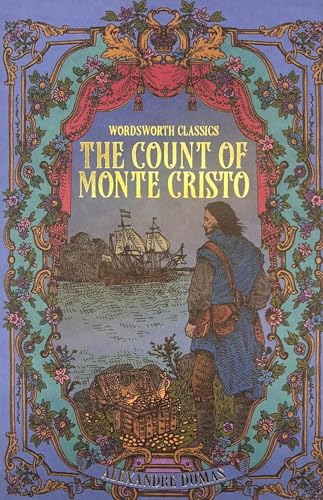
With an Introduction and Notes by Keith Wren, University of Kent at Canterbury.
The story of Edmund Dantes, self-styled Count of Monte Cristo, is told with consummate skill. The victim of a miscarriage of justice, Dantes is fired by a desire for retribution and empowered by a stroke of providence. In his campaign of vengeance, he becomes an anonymous agent of fate.
The sensational narrative of intrigue, betrayal, escape, and triumphant revenge moves at a cracking pace. Dumas' novel presents a powerful conflict between good and evil embodied in an epic saga of rich diversity that is complicated by the hero's ultimate discomfort with the hubristic implication of his own actions.
Our edition is based on the most popular and enduring translation first published by Chapman and Hall in 1846. The name of the translator was never revealed.
BUY THE BOOK
Community Reviews
The story is not only about revenge — it’s also about jealousy, betrayal, grief, hatred, and faith, luck, redemption, gratitude, justice, loyalty, honor, vanity, and our favorite, of course — love. What are people capable of doing when they are jealous? Do people realize the pain and hurt they might cause with their actions? Can one live a good, honorable life after inflicting eternal pain and suffering upon an innocent? Will justice ever be served? The story explores an enormous number of questions, too many to even attempt to list here.
The tale explores the sad reality of the human justice system — its corruption and indifference, whether intentional or not. We explore how easy (or difficult) it is to corrupt almost everyone, and how feeble the human will is when faced with an opportunity to obtain the most desirable. We learn that some people are easy to manipulate and some — not so much. Does it depend on character, or on social status? The most interesting and beautiful aspect of the book is that it actually doesn’t give you complete answers to any of these questions, but it does force you to think and derive your own conclusions. The narrator is not preaching, not trying to convince the reader of anything, and is not imposing any paradigms. Instead, the reader is held in the utmost respect by allowing one to draw their own conclusions, based on their own values. What’s more, the story provides ample opportunity to re-think one’s own values and principles, to see the world not only from another’s perspective, but in the most intimate and nuanced manner imaginable.
As the story progresses, we’re faced with deeper themes — can a human be an agent of God himself? What makes one as such — and does it even matter at all? What virtues does society uphold? Is carrying out your vengeance liberating or suffocating? Who is to determine what one deserves? These and more are explored from various lenses through a fascinating plot with twists that are unexpected yet predictable (if you pay attention while reading, of course). Alexander Dumas takes his reader for an intelligent specimen of Homo Sapiens — maybe a little too intelligent for my personal liking, if I’m being honest.
Now, to show you that I’m not writing this while wearing rose-colored glasses, there are a few potential (emphasis on potential) flaws. Some may say that characters are flat, not well-developed, the romances are cheesy, and that the situations in which characters find themselves are so unbelievable, they might border on fantasy. I can see how this criticism can find its way and mark with dark stain this masterpiece of a novel. Although just hearing this makes my eyes bleed and ears wither, I’m willing to entertain these dark, unjust, and utterly insulting claims. Let’s remember that the novel was written in 1846, in France, by a French author, and its setting starts with Napoleon’s return to power during the Hundred Days, and continues through the political turmoil. While the events took place earlier than the publication date of the novel, Alexander Dumas depicted the French lifestyle of that time: a stark contrast between social classes with upward movement made practically impossible, while the economy relied primarily on land ownership, and the wealth of an individual was reliant upon reputation alone, not merit or character. Though I, thankfully, never experienced living in such a society, in my humble opinion, Dumas’ portrayal of somewhat “shallow” characters was no fault of his — he was merely trying to be accurate.
As for cheesy romance — yes, but cheesy does not automatically equal bad. The cheese offers a light, somewhat humorous tone to the otherwise sad and dark story. It gives the reader a taste of hope — hope to one day love and be loved as much as these characters love each other. Maybe. Unless that’s not your thing. Even if you don’t appreciate the “sincerity” of the cheese, it raises the stakes of the plot and makes readers more invested in the characters. And trust me, with the sheer number of “morally grey” characters (mildly speaking), we want someone to cheer for, and the cheese does a pretty good job of offering exactly that.
Fantastic scenarios may or may not be present. For the sake of not spoiling anything, all I can say is this: whether you consider some scenarios verging on fantasy or not will depend primarily on your tolerance for the fantastical in general. There are no magic wands, no God appears to save the day, no demon possesses anyone (mostly), no dragons flying around. However, there might (or might not) be spells, resurrections, “fate” working its way to justice, and mild delusions on the part of some characters in particular situations. Yet have no fear, the spells are done in very much everyday human tongue, the “fate” is nothing more than a very low statistical probability taking place, and the delusions are easily explainable by biology, fears, and our normal human tendencies.
Lastly, the writing style. I read the English version translated by Robin Buss. I did not read any other translations, so cannot compare with any degree of certainty, but I will say this: this translation is WORTH it. It’s amazing. The novel reads as if it were written in English in the first place — the style is very classic, full of long, beautiful sentences, yet very accessible and simple at the same time. Robin Buss managed to capture the right tone of a classical novel with eloquent speech, yet he made it readable and understandable. Following the story “as is” requires no more than average intelligence. Getting something out of this novel requires more thought, but language has nothing to do with it — that’s purely on your analytical faculties. The pacing of the story is perfect — not slow at all. The beginning, I’d argue, paces a little too fast. There are some drops in pacing in certain chapters, but on average, this is a very well-paced book — designed not to devour it, but to bite a small piece at a time, chew, swallow, enjoy, and repeat. The novel is not infested with long boring paragraphs describing each of the thousands of leaves on a single tree, far from it — the novel centers around the story and everything that has something to do with it. To say there is absolutely no description of nature or surroundings would be a lie. Those descriptions ARE present, but they are rare and “high-quality,” so don’t be afraid of them.
Finally, a few notes that some readers might find useful. The story is very complex, even tertiary characters become important — don’t forget about them. Trust the author, he doesn’t plunge you into an abyss of nonsense, he treats you with respect and leads you without holding your hand constantly. There are many sub-stories that are told by some other character, there’s a lot of “hearsay”, but all is done very well. Once you get used to it, I hope you don’t find the narrative any different than that of the main plot. These sub-stories are important for the overarching plot of the novel. Be ready to feel all sorts of emotions while reading — crying can happen from various causes as a result of reading this book — grief, happiness, and jealousy. You’ll also laugh and worry along with the characters. You’ll become pensive all of a sudden, and then confused, and then tired, or, on the contrary, energetic. This novel might take over your life; you might find yourself thinking about it while working, driving, studying, even taking a shower. You might lose sleep over it — I think it’s been proven that reading the Count of Monte Cristo is akin to travelling at the speed of light — the time slows down (forgive me for not being able to retrieve such study and cite it, but it exists, just take my word.) If I had to choose one: experience traveling at the speed of light or re-experience my reading of this book for the first time, I’d choose the latter without a blink. I hope when you pick up the book, you enjoy it as much as I did, and when faced with the same question, I hope you agree with my selection.
See why thousands of readers are using Bookclubs to stay connected.