Some Bright Nowhere: Oprah’s Book Club: A Novel Called "Extraordinary" by Elin Hilderbrand
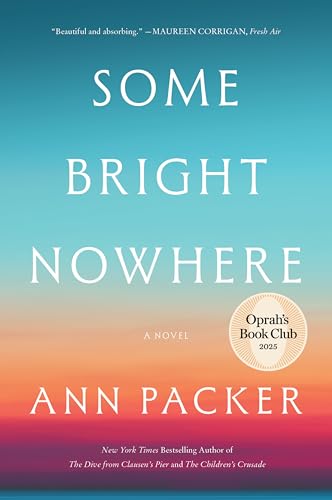
AN OPRAH’S BOOK CLUB PICK
"Extraordinary. Books like this are why I love reading. This novel about marriage and friendship and life and dying is a marvel." —Elin Hilderbrand
“Profound and moving and real.”—Andrew Sean Greer
“Some Bright Nowhere is a novel that draws you in deeply and holds you there. Wonderful.”—Meg Wolitzer
The bestselling, beloved author returns with her first novel in over a decade, an intimate and profoundly moving look at a long marriage and the ways in which a startling request can change a couple’s understanding of who they are, together and apart.
Eliot and his wife Claire have been happily married for nearly four decades. They’ve raised two children in their sleepy Connecticut town and have weathered the inevitable ups and downs of a long life spent together. But eight years after Claire was diagnosed with cancer, the end is near, and it's time to gather loved ones and prepare for the inevitable.
Over the years of Claire’s illness, Eliot has willingly—lovingly—shifted into the role of caregiver, appreciating the intimacy and tenderness that comes with a role even more layered and complex than the one he performed as a devoted husband. But as he focuses on settling into what will be their last days and weeks together, Claire makes an unexpected request that leaves him reeling. In a moment, his carefully constructed world is shattered.
What if your partner’s dying wish broke your heart? How well do we know the deepest desires of those we love dearly? As Eliot is confronted with this profound turning point in his marriage and his life, he grapples with the man and husband he’s been, and with the great unknowns of Claire’s last days.
Ann Packer makes a triumphant return with this powerful novel that is tender and raw, visceral and unexpected. Emotionally vibrant and complex, Some Bright Nowhere explores the profound gifts and unexpected costs of truly loving someone, and the fears and desires we experience as the end of life draws near.
BUY THE BOOK
Community Reviews
https://cerebralspice.wordpress.com/2026/02/27/book-list-some-bright-nowhere-by-ann-packer
**Could be upsetting for anyone dealing now with someone close dying, or who has lost someone recently.
"Some Bright Nowhere" left me pondering about life and death, and the space in between. How someone's dying wish can injure the person they've loved for decades.

Author Ann Packer says Some Bright Nowhere was inspired by a true story she heard. A woman was reaching the final stages of illness, and her husband was perceived as incapable of caring for her, so her two best friends moved into their home and served as her caregivers. “It blew my mind that you could just expel your spouse because they weren’t exactly right for the job, whatever that was going to be,” she recalls. At first, she was admittedly “taken with the notion of that womanly cocoon of care and love” (with which fictional Claire is thoroughly enamored), but she “kept thinking back to the man. What was his experience of that going to be?”
The result is Some Bright Nowhere, which Packer wanted from its inception to be a rather short book. She also knew how it had to end, so she was “writing toward that moment,” even though she was not clear, as she began, about how her characters were going to arrive at that place. She just knew that Claire was going to be informed by her oncologist that further treatment for metastatic cancer would be futile. And, facing her own imminent death, she would ask her husband, Eliot, to leave their marital home so that her two best friends, Holly and Michelle, could serve as her caregivers during her final days.
Claire and Eliot have been married for nearly forty years, and Claire has been battling cancer for the past eight. Eliot retired early to care for Claire. Their two children are grown, have their own lives, and no longer live near the small Connecticut town in which they grew up. Abby, a pediatrician, is married with two young children of her own. Josh is a talented but struggling songwriter/singer who holds various part-time jobs because his music gigs are neither steady nor well-paying enough to fully support himself.
Holly has been Claire’s dearest friend since they met in second grade. Divorced from Stuart, a television writer who is remarried and residing in Los Angeles, Holly lives near Eliot and Claire in a large, contemporary home. Michelle was Claire’s college roommate. The chief strategy officer of a healthcare network has never married or had children. To Eliot, the women are “a threesome made of two duos” because Claire got to know Holly and Michelle separately. For a time, as young, single women, they lived together in Manhattan before Claire enrolled in a PhD program at Yale and Michelle’s career took her to the South. Claire has always been the nucleus, the sun around which the other two women have always orbited. And Eliot is convinced that once Claire is gone, Holly and Michelle will not continue their friendship because they don’t really like each other very much.
Eliot is completely and understandably flabbergasted when Claire announces that she wants Holly and Michelle to be with her as her life comes to an end. He is “astounded” by Claire’s expressed wish. “Aghast.” He is utterly confused, perplexed, and wounded when Claire explains that she wants them to take care of her, “Eliot. Instead of you.” She wants her life to end in a fashion similar to that of another friend, Susan, who had lived alone for ten years when she became terminally ill and “her nearest and dearest circled around.” Only women – her sisters, daughters, and friends, including Claire. Claire recalls Susan’s final two months of life as “full of female energy, chatter, tears, laughter.”
Where is Eliot supposed to go? Where is he expected to be as his wife, the woman who gave “him his way of being a father,” is dying? And why does she want to banish him from her side now when it seems to Eliot that she needs him more than she ever has . . . and he has planned, until that moment, to honor the promises he made to her by caring for her until they are parted by death?
In his frustration, Eliot accuses Claire of wanting her death “to be pretty” and being in denial about what the final weeks or months of her life will be like, practically begging her to help him understand not just precisely what it is that she is seeking, but why she wants it. He is baffled as to why her friends cannot come to the home they share to spend time with her, as their children and grandchildren will, without requiring him to depart. Claire simply insists her request “isn’t about you.” Acknowledging that she should not have asked Eliot to leave, and that she fully understands not just that, but also that she has hurt Eliot deeply, Claire persists. She demands that Eliot not “see it as anything more than it is.”
Convinced that Claire is terrified, filled with grief, and, perhaps, confused (the cancer has produced lesions in her brain), he reluctantly and quietly acquiesces, even though both Josh and Abby are upset. He neither argues with nor tries to dissuade Claire, telling their children that he is going to do what their mother wants – move into Holly’s house, and permit Holly and Michelle to move into his and Claire’s home. In short, he does what he recognizes he has done for the entirety of their marriage. He concedes. His subjugates not just his emotional needs and desires, but his very place in the world and in Claire’s life, in order for Claire to have what she wants. He is unwaveringly resolved to grant Claire’s dying wish.
Some Bright Nowhere is a beautifully crafted consideration of Eliot and Claire’s relationship and its dynamics, told from Eliot’s perspective. He knows that he has arrived at a turning point in his life. There will be no going back to the way things were. Claire’s prognosis and subsequently expressed dying wish propel him into reflection on his marriage and how he has functioned within the relationship. Depicting the inevitable tension between them, in light of Claire’s desire, Packer also spotlights the differences between Claire’s relationship with Eliot and the ways she interacts with her female friends – distinctions that are not lost on Eliot.
Through a story that is often painful to read, Packer compels readers to consider how they might want to spend their final days if given a terminal diagnosis, including whom they would want to have serve as their caregiver (or, as Eliot ponders, “caretaker”). Eliot reasonably expected to remain in that role, but Claire usurps his expectations with her request that he step aside. Packer tacitly asks readers to contemplate whose expectations should prevail, and why.
Packer’s characters are fully formed and fascinating. They are also infuriating at times. Eliot has always been a largely passive, calm, steady person who lived up to his responsibilities, provided for his family, had few close male friends, and went along to get along. His own son tells him, “Dad. My whole life you’re like this benign blob walking around. You’re like . . . amenable. Except when you’re not.” Eliot is devoted to Claire and attentive to her needs, but powerless, of course, to stop what is happening to her. He is bewildered and, perhaps, jealous when he overhears Claire and her friends laughing, reminiscing, and sharing a bottle of wine. He is literally the odd man out. And that both humiliates – he is reluctant to tell any one about Claire’s demand and wonders who might already have been made aware of it – and bruises him.
Claire, according to Packer, may have “a very romantic idea of a female circle of warmth and love from her women friends. It’s a whimsical thing that she does.” She wants hers to be a good death – the kind she believes her friend experienced. But, of course, she has no conception of how her dying friend actually perceived what was happening around her. It is easy to see Claire as selfish and self-centered – completely dismissive about Eliot’s feelings and needs. Packer does not reveal whether Claire gave any thought to how her wish would impact Eliot, and even when she recognizes how deeply she has hurt him, she pointedly refuses to rescind her request. She lets Eliot move into Holly’s home and permits her friends to act as gatekeepers causing Eliot to feel unwelcome in his own home when he comes back to the house to see Claire. Her failure – or inability – to articulate precisely why she did not want Eliot to care is frustrating for readers, as it is for Eliot. But to write Claire off as merely self-indulgent misses the point Packer is striving to make. She generously believes Claire “told as much of the truth that she could and the version of the truth she knew at the time.” And perhaps there are deep-seated reasons, based on their nearly four decades together, fueling Claire’s wish.
In Some Bright Nowhere, Packer takes readers on a torturous, emotionally fraught journey with Eliot and Claire not just toward Claire’s inevitable death, but a deeper understanding of themselves, each other, and the ways they have related to each other throughout the years. She says she strives to portray both “what’s going on consciously for the characters and what’s going on consciously.” An important component of the story arc is the process of Eliot and Claire arriving at an understanding of what motivated Claire’s dying wish. The book is also a rich, deeply affecting, and contemplative meditation on several other themes, including the characteristics of Claire’s female friendships as compared to her connection to her life partner.
Packer also brings attention to the concepts of commitment, keeping promises, and obligation. What are the limits? Are there limits? What do we have a right to ask for and receive from our family and friends on a daily basis or in a time of crisis? How should the individual needs of spouses be balanced within the relationship?
Packer says writing the book helped “focus my interest in the way people function in very, very difficult times.” More particularly, through her characters, she illuminates how challenging it can be to talk about sensitive and unpleasant topics, especially the looming end of life. What Eliot and Claire experience individually and collectively demonstrates the importance of overcoming fear to clearly enunciate desires, expectations, and roles. And to leave nothing unsaid. She challenges readers to consider how they would respond if their spouse or partner’s dying wish broke their heart. And what choices they would make if placed in a situation similar to Eliot’s. Or Claire’s.
Some Bright Nowhere deserves all the praise and accolades it is receiving. It is one of the best books of 2025.
Thanks to NetGalley for an Advance Reader's Copy of the book.
See why thousands of readers are using Bookclubs to stay connected.