Neurotribes: The Legacy of Autism and the Future of Neurodiversity
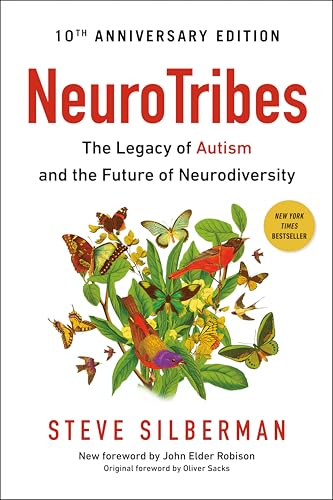
This New York Times–bestselling book upends conventional thinking about autism and suggests a broader model for acceptance, understanding, and full participation in society for people who think differently.
“Beautifully told, humanizing, important.”—The New York Times Book Review
“Breathtaking.”—The Boston Globe
“Epic and often shocking.”—Chicago Tribune
WINNER OF THE SAMUEL JOHNSON PRIZE FOR NONFICTION AND THE CALIFORNIA BOOK AWARD
What is autism? A lifelong disability, or a naturally occurring form of cognitive difference akin to certain forms of genius? In truth, it is all of these things and more—and the future of our society depends on our understanding it. Wired reporter Steve Silberman unearths the secret history of autism, long suppressed by the same clinicians who became famous for discovering it, and finds surprising answers to the crucial question of why the number of diagnoses has soared in recent years. Going back to the earliest days of autism research, Silberman offers a gripping narrative of Leo Kanner and Hans Asperger, the research pioneers who defined the scope of autism in profoundly different ways; he then goes on to explore the game-changing concept of neurodiversity. NeuroTribes considers the idea that neurological differences such as autism, dyslexia, and ADHD are not errors of nature or products of the toxic modern world, but the result of natural variations in the human genome. This groundbreaking book will reshape our understanding of the history, meaning, function, and implications of neurodiversity in our world.
BUY THE BOOK
Community Reviews
This was a very informative book on the history of Autism and Neurodivergence. I listened to this on audio and it was just tough getting through some of the subject matter. There were points where I almost wanted to cry from the facts and accounts from the past research into Autism Spectrum Disorder.
I’ve been wanting to learn more about Autism since my son is autistic. It had a lot of information, but for anyone that wants to read something easier this won’t be the book for them. It reads like a medical research paper, so I don’t feel that a lot of readers would like that. I love to learn new things and like to read case studies sometimes so this was similar.
Just I don’t recommend if you are very sensitive to child neglect, child abuse, and some other tough subjects.
I’ve been wanting to learn more about Autism since my son is autistic. It had a lot of information, but for anyone that wants to read something easier this won’t be the book for them. It reads like a medical research paper, so I don’t feel that a lot of readers would like that. I love to learn new things and like to read case studies sometimes so this was similar.
Just I don’t recommend if you are very sensitive to child neglect, child abuse, and some other tough subjects.

This is fundamentally a history book about autism and Aspergers and how it's been handled through time. There is also a lot about how adults on the spectrum have done well in their adult lives and lobbied on their own behalfs and on the behalf of children going through what they did. There were some particularly moving and terrifying parts- particularly the section on the holocaust. I feel like the book was helpful to understanding certain issues about disabilities in general and not just the autism spectrum specifically.
There is very little science, unfortunately. The title suggested to me that there would be at least some substantial section on neurobiology.
There is very little science, unfortunately. The title suggested to me that there would be at least some substantial section on neurobiology.
See why thousands of readers are using Bookclubs to stay connected.