Mother Mary Comes to Me
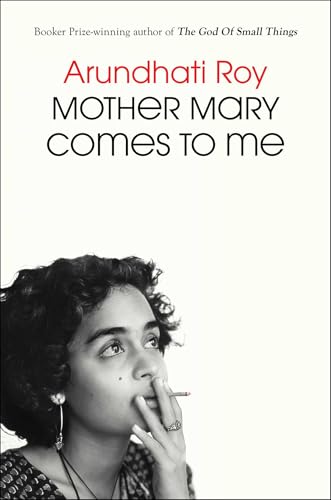
By Arundhati Roy

Named One of The New York Times Book Review’s Top Ten Books of the Year

Winner of the the National Book Critics Circle Award for Autobiography | Finalist for the Kirkus Prize | Nominated for the Women's Prize for Nonfiction

One of the best-reviewed books of the year, a raw and deeply moving memoir that “pulses with compassion and moral outrage” (The Wall Street Journal) from the legendary author of The God of Small Things and The Ministry of Utmost Happiness that traces her complex relationship with her mother, Mary Roy, a fierce and formidable force who shaped Arundhati’s life both as a woman and a writer.


In this, her first work of memoir, Arundhati Roy writes, “Perhaps even more than a daughter mourning the passing of her mother, I mourn her as a writer who has lost her most enthralling subject.”

Mother Mary Comes to Me, is an intimate chronicle, “full of precise imagery and blistering emotional intelligence” (The Washington Post), of the relationship between two women, a school teacher and a writer, who happen to be mother and daughter. Roy writes with a novelist’s unsettling ability to be inside her own story as well as outside it, simultaneously child and adult, attached and detached, protagonist and narrator. She describes how she came to be the writer she is, shaped by circumstance, but above all by her relationship to her extraordinary, singular mother Mary, who she describes as “my shelter and my storm.”

“Heart-smashed” by Mary’s death, yet puzzled and “more than a little ashamed” by the intensity of her response, Roy began to write, to make sense of her feelings about the mother she ran from at age eighteen, “not because I didn’t love her, but in order to be able to continue to love her.”

With the scale, sweep, and depth of her novels and the passion, political clarity, and warmth of her essays, Mother Mary Comes to Me “builds worlds that are revolutionary, made from the darkness that she spins into purpose” (The New Republic). An ode to freedom, a tribute to thorny love and savage grace—Mother Mary Comes to Me is a memoir like no other.

BUY THE BOOK

Published Sep 2, 2025

352 pages

Average rating: 7.94

104 RATINGS

|

Community Reviews

dskreads
Jun 07, 2026
7/10 stars
Reading Mother Mary Comes to Me leaves me with a strangely mixed feeling something both familiar and unsettling at the same time. The mother–child relationship at the center of the book feels deeply intricate, almost overwhelming in the way it is portrayed. It is not a simple story of love or conflict, but something far more layered and difficult to categorize. What stayed with me most is how children of emotionally complex or unavailable parents often grow into a kind of forced self-sufficiency. There is strength in that, but also a quiet emotional distance that seems to linger underneath. It made me think about how independence is not always just a personality trait it can also be a survival response. At times, the relationship between Arundhati Roy and her mother felt both fascinating and heavy to witness. I found myself trying to understand how admiration, affection, and hurt can coexist in the same space. There were moments where I couldn’t fully grasp the depth of that bond, especially the way love is still present despite everything else. What the book ultimately left me with is less of a conclusion and more of a discomfort with easy interpretations of motherhood. It shows how love within families can be complicated, unresolvable, and still deeply formative. It doesn’t offer clarity, but it does leave behind a lingering emotional weight that stays with you after reading.
LollipopTree
May 31, 2026
8/10 stars
It was a fascinating account of what made Roy a writer and the impact of her mother upon her life. I definitely felt it was a bit too long.
Chris Helfrich
Feb 24, 2026
9/10 stars
An incredibly moving memoir
Lesley
Dec 19, 2025
9/10 stars
LOVED IT.
richardbakare
Nov 11, 2025
8/10 stars
Arundhati Roy’s memoir brings a very unique and refreshing voice to the memoir genre. Equal parts scathing criticism, inquisitive self-reflection, humor, and love. In many ways, it reminded me of Jennette McCurdy’s “I’m Glad My Mom Died” but with more forgiveness in the end and a broader societal analysis of the female experience in a world almost comically patriarchal. The world needs more memoirs like this one, willing to challenge everything about life without reservation and deeply introspective. What made this memoir particularly engaging was Roy’s extensive use of the third person and nicknames for herself and the various people in her life. This approach proves especially useful in trying to dissect the mother-daughter relationship as objectively as possible. It is as if she cannot engage the experience from the first person because of the emotional weight of the experiences she delves into. There is a refreshing honesty about the untrustworthiness of our own lens when reflecting. That said, Roy still manages to make definitive statements about life, the India & Pakistan conflict, religion, violence, and relationships. Her philosophical views on each are on full display and are rooted in highlighting the absurdity of convention, the trappings of religion/politics, the use of violence to control, and the many forms of addiction. It becomes very apparent within a few pages how this book has become one of the most talked about of 2025. It is also apparent that we in the West are ignorant to the lived experiences of those of the Indian diaspora.

See why thousands of readers are using Bookclubs to stay connected.