Mona's Eyes: A Novel
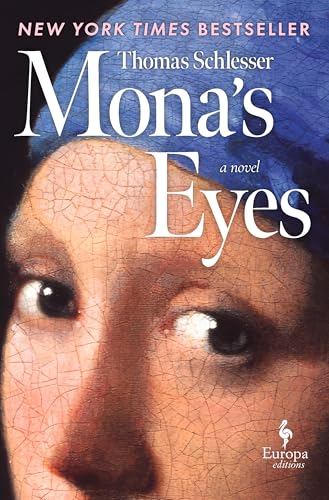
New York Times Bestseller - Barnes & Noble 2025 Book of the Year - Boston Globe Best Book of the Year - National Indie Bestseller - Top Ten Indie Next Pick - Indigo Heather's Pick
Ten-year-old Mona and her beloved grandfather have only fifty-two Wednesdays to visit fifty-two works of art and commit to memory "all that is beautiful in the world" before Mona loses her sight forever.
While the doctors can find no explanation for Mona's brief episode of blindness, they agree that the threat of permanent vision loss cannot be ruled out. The girl's grandfather, Henry, may not be able to stop his granddaughter from losing her sight, but he can fill the encroaching darkness with beauty. Every Wednesday for a year, the pair abscond together and visit a single masterpiece in one of Paris's renowned museums. From Botticelli to Basquiat, Mona learns how each artist's work shaped the world around them. In turn, the young girl's world is changed forever by the power of their art. Under the kind and careful tutelage of her grandfather, Mona learns the true meaning of generosity, melancholy, love, loss, and revolution. Her perspective will never be the same--nor will the reader's.
Mona's Eyes is a heartfelt, enlightening journey across five centuries of Western art history. With the emotional impact of The Elegance of the Hedgehog and the readability of The Little Paris Bookshop, Thomas Schlesser's sensational debut novel is at once a moving book about the beauty of life and a deeply touching story about the special bond between a girl and her grandfather.
"Vibrant debut ... Schlesser seamlessly interweaves the art lessons with Mona's story... Readers of Jostein Gaarder's Sophie's World will love this."--Publishers Weekly
Discover all 52 masterpieces inside the fold-out dustjacket.
BUY THE BOOK
Community Reviews
What Bookclubbers are saying about this book
✨ Summarized by Bookclubs AI
Readers say *Mona’s Eyes* offers a unique blend of coming-of-age and art history, praised for its thematic depth and grandfather-granddaughter bond. R...
First of all, I listened to this one - which is a very hard one to follow. Since I couldn't see the work of art, I had to stop and go see what Schlesser was describing through the story as Dade explained the significance of each work of art to his granddaughter, Mona. A book that prompts research based on art history is a very good thing, as I personally learned a lot. However, there also many things about the Mona's Eyes story itself that really bugged me. First of all, start with the cover. Why is "Girl with a Pearl Earring" featured, when the principals didn't view that piece of art by Johannes Vermeer? Dade and Mona viewed only art that was displayed in The Louvre, the Musee d'Orsay and Centre Pompidou, all in Paris. "Girl with a Pearl Earring" is displayed at the Mauritshuis Museum in The Hague. A reference to the work was mentioned near the end, but only in reference to Vermeer's work. So I am stumped as to why it received the front cover. The other things that bothered me? So many, I can't even! The parents, who didn't seem to give a damn. Why didn't they insist on an accounting of the psychiatrist appointment, or to even know his name/establish a relationship? I guess it was because Dad was a drunk and Mom was addicted to her iPhone? There was Dade, who could have taught art history in a renowned university - what was his background, seriously, I felt I was in a doctorate-level art history class! And Mona herself, who, as the story went along, grew more irritating with her precociousness and intellectual observations that could have placed her in her grandfather's art history course, debating and discussion with the old man himself. Mona was way beyond the actions/behaviors of a ten-year-old girl. Also, I have read a few stories in the past years that incorporate 'magical realism'. Mona's ties to her grandmother through their shared necklace, and particularly the mother's and opthomologist's insistence that she leave the necklace on lest she go blind, was far-fetched. As mentioned, studying important pieces of art, with the background of the world surrounding the artist as he/she created, made this a worthwhile read. But the charm of the story wore off on me, as the adults in Mona's life made some very questionable decisions regarding her care and overall health.

Only one person of our 12 bookclub members actually finished this - and she confessed she skipped much of the art descriptions/history lessons. If you took art history, you probably already know this, if you haven't you (like me) aren't that interested. I tried listening to the audio book and made it 1/2 way through before I couldn't do any more. The writing is DETAILED descriptions, the girl and her grandfather are sweet but almost superfulous to the art history lesson. Our club couldn't figure out why the high rating.
See why thousands of readers are using Bookclubs to stay connected.