Freedom Is a Constant Struggle: Ferguson, Palestine, and the Foundations of a Movement
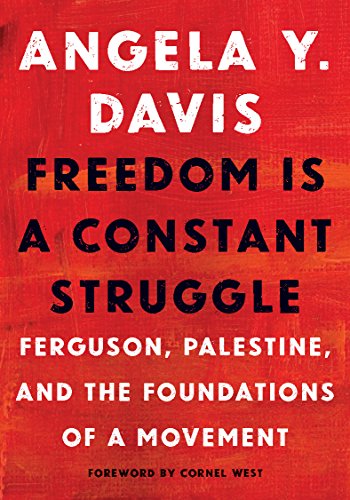
A powerful collection of essays on justice, liberation, and the global fight for freedom.
In these newly collected essays, interviews, and speeches, world-renowned activist and scholar Angela Y. Davis illuminates the connections between struggles against state violence and oppression across history and around the world.
Reflecting on the importance of Black feminism, intersectionality, and prison abolition for today's movements, Davis explores the enduring legacies of liberation struggles--from the Black Freedom Movement to the South African anti-apartheid movement. She reveals the profound connections between contemporary movements for justice, from Ferguson to Palestine, demonstrating how seemingly separate struggles are bound together by shared histories, common challenges, and collective aspirations.
Drawing on decades of activism and scholarship, Davis argues that meaningful change is built through solidarity across borders, identities, and generations. Her essays challenge readers to rethink conventional ideas about freedom, democracy, and justice while offering a hopeful vision of movements working together to confront racism, inequality, mass incarceration, militarism, and state violence.
Both an urgent political reflection and an enduring call to action, Freedom Is a Constant Struggle reminds us that progress is never inevitable--it is created through courage, collective action, and an unwavering commitment to human liberation.
BUY THE BOOK
Community Reviews

Read this one for book club. It generated some interesting discussions, but I have to admit, some of it was repetitive and a little dry when reading it without context. But the message is heard loud and clear — freedom IS a constant struggle. As history has shown. This book was put together during the Obama administration. She had no idea of the shit storm headed our way... :-(
Some take-aways:
We have to constantly make connections and exercise of intersectionality. Nothing happens in isolation. Militarization of police is EVERYWHERE.
We are not only coming from a a standpoint of US exceptionality, solidarity isn't only from that stand point. But what can we learn from Palestinian feminism, what can
they learn from us?
The history of Palestinian freedom has been marginalized. Zionism is loosing it's force.
Its not to excuse him to take bolder step but look at the history of the US no change has happened when the president chooses to move a progressive way.
What has kept me going, new modes of community. Whatever I'm doing always connected to communities we are in an era where we should encourage snese of community
when Neo librism encourages people to think of only themselves and not collectively
It is in collectivities that we find resevouirs of hope and optimism
On solidarity: Latine, African, Indigenous. We now have inherited the properties of each revolution. Good or bad. But what we have to remember is there
is joy in there and inspiration. Joy in the community, in the togetherness. These revolutions of the past help to create the real conditions to move forward.
Why it's also a immigrant issue.
The appalling treatment of undocumented immigrants from the UK to the US compels us to make connections with Palestinians that have been transformed into immigrants against their will.
On their own ancestral land.
She brings up the case of Jimmy Mubenga and his wrongful unaliving as he was deported from the UK back to Angola. This is not only a US issue.
It is the bold mass movements of the people.
We have to constantly make connections and exercise of intersectionality. Nothing happens in isolation. Militarization of police is EVERYWHERE.
We are not only coming from a a standpoint of US exceptionality, solidarity isn't only from that stand point. But what can we learn from Palestinian feminism, what can
they learn from us?
The history of Palestinian freedom has been marginalized. Zionism is loosing it's force.
Its not to excuse him to take bolder step but look at the history of the US no change has happened when the president chooses to move a progressive way.
What has kept me going, new modes of community. Whatever I'm doing always connected to communities we are in an era where we should encourage snese of community
when Neo librism encourages people to think of only themselves and not collectively
It is in collectivities that we find resevouirs of hope and optimism
On solidarity: Latine, African, Indigenous. We now have inherited the properties of each revolution. Good or bad. But what we have to remember is there
is joy in there and inspiration. Joy in the community, in the togetherness. These revolutions of the past help to create the real conditions to move forward.
Why it's also a immigrant issue.
The appalling treatment of undocumented immigrants from the UK to the US compels us to make connections with Palestinians that have been transformed into immigrants against their will.
On their own ancestral land.
She brings up the case of Jimmy Mubenga and his wrongful unaliving as he was deported from the UK back to Angola. This is not only a US issue.
It is the bold mass movements of the people.
This set of essays is a selection of speeches given by Davis over the past several years. She narrates, so it is almost like being there. There is that Davis espouses are all important: end racism, promote rights for women, fight against incarceration. Thank you Dr Davis, for all of your activism over the years.
See why thousands of readers are using Bookclubs to stay connected.