A World Without Summer: A Volcano Erupts, A Creature Awakens, and the Sun Goes Out
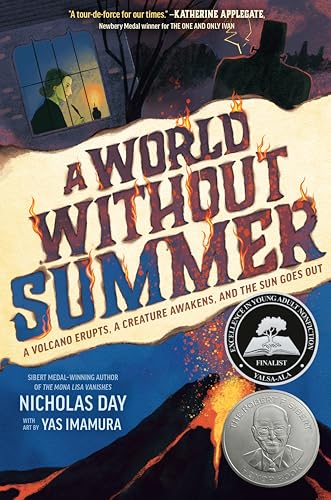
The true story of how a massive catastrophic eruption plunged the world into darkness, altering the global climate and inspiring the likes of Mary Shelley’s Frankenstein—from the award-winning author of The Mona Lisa Vanishes and featuring black-and-white illustrations throughout.
“A tour-de-force for our times . . . At once a heart-stopping tale of climate change and a profoundly hopeful call to action.”—Katherine Applegate, Newbery Medal winner for The One and Only Ivan
A BOSTON GLOBE-HORN BOOK AWARD WINNER • A ROBERT F. SIBERT HONOR BOOK • A YALSA EXCELLENCE IN NONFICTION FINALIST • A SCBWI GOLDEN KITE AWARD FINALIST • ONE OF THE BEST BOOKS OF THE YEAR: The New York Times Book Review, NPR, Horn Book, The Bulletin of the Center for Children's Books, The Boston Globe
The world was upside-down. The wind was fire. The sky was ash. The rain was rock.
A couple of hundred years ago, on a quiet Indonesian island, a volcano called Tambora erupted with a force and violence that changed history.
It tore apart the island, and in the months and years that followed, its fallout tore apart the world. The sun refused to shine; the rain refused to stop. Everything that everyone assumed would always be there—a world that made sense, a climate that made sense—was suddenly gone.
From this riot of thunder and lightning, a young woman named Mary Shelley conceived of a scientist and his cursed creature. From the nightmare of Tambora, she wrote a nightmare of a book: Frankenstein—a terrifying reminder of how much damage we humans might do, without even realizing it.
This is the story of a volcano that changed the world and a creature that changed us.
Once upon a time, everything was different. And no one knew if it would ever be the same.
In this masterful work, Nicholas Day, author of the Sibert Award–winning The Mona Lisa Vanishes, brings us a story taken from the archives but seemingly scripted for us today: a tale of climate change and human folly and hope—and what happens when the world suddenly goes wrong.
BUY THE BOOK
Community Reviews
A volcano erupts in Indonesia; the weather fails in Europe and America; crops rot or freeze; people riot, migrate, starve, cope, create. The central point of this book is that we live, have always lived, in a deeply interconnected world, whether or not our technologies and psychology allow us to grasp it, and that point does land pretty cleanly.
Beyond that, though, I really enjoyed Day’s exploration of how people reacted to the impact of this catastrophe—especially those on the other side of the world, who couldn’t see the connection between that distant event and their own disrupted lives. The grasping for understanding, the scrambling to adapt and respond. People across the world faced a mystifying series of dreadful repercussions, and struggled mightily to comprehend their source—sunspots? divine retribution? war? the cessation of war? lightning rods? And it’s not just that they didn’t discover the truth; what was so intriguing was the desperate places they looked for it. It’s not simply that they were lacking information—they just had no idea what they had no idea about, and in the intellectual hubris which is so common among us, they mistook the limits of their own knowledge for the limits of what was knowable. It’s a fascinating lens on human understanding.
I have to admit, I also appreciated Day’s deep focus on Mary Shelley and the writing of Frankenstein (one of my favorite books). He may be overstating the effect of the climate on her mood and her creative output, and he may be stretching to apply her allegory to the larger narrative. But he draws some intriguing insights, and paints a vivid picture of the process she went through to generate that pivotal work. Plus he rightfully rakes her husband over the coals, and I’m here for that as well.
Percy was a genius, and Mary made the allowances for him that people have always made for genius. But she was also a genius, and no one made allowances for her.I can’t say what that has to do with the eruption at Tambora, but I’ll take it.

See why thousands of readers are using Bookclubs to stay connected.