The Body Keeps the Score: Brain, Mind, and Body in the Healing of Trauma
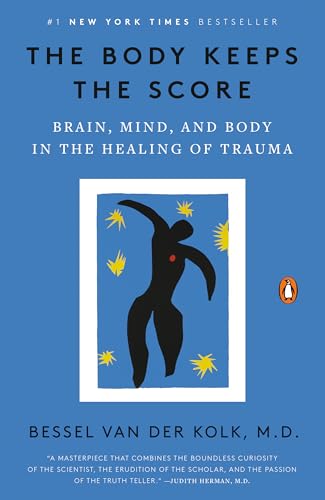
#1 New York Times bestseller
“Essential reading for anyone interested in understanding and treating traumatic stress and the scope of its impact on society.” —Alexander McFarlane, Director of the Centre for Traumatic Stress Studies
A pioneering researcher transforms our understanding of trauma and offers a bold new paradigm for healing in this New York Times bestseller
Trauma is a fact of life. Veterans and their families deal with the painful aftermath of combat; one in five Americans has been molested; one in four grew up with alcoholics; one in three couples have engaged in physical violence. Dr. Bessel van der Kolk, one of the world’s foremost experts on trauma, has spent over three decades working with survivors. In The Body Keeps the Score, he uses recent scientific advances to show how trauma literally reshapes both body and brain, compromising sufferers’ capacities for pleasure, engagement, self-control, and trust. He explores innovative treatments—from neurofeedback and meditation to sports, drama, and yoga—that offer new paths to recovery by activating the brain’s natural neuroplasticity. Based on Dr. van der Kolk’s own research and that of other leading specialists, The Body Keeps the Score exposes the tremendous power of our relationships both to hurt and to heal—and offers new hope for reclaiming lives.
BUY THE BOOK
Join a book club that is reading The Body Keeps the Score: Brain, Mind, and Body in the Healing of Trauma!
Community Reviews
What Bookclubbers are saying about this book
✨ Summarized by Bookclubs AI
Readers say *The Body Keeps the Score* offers a deeply insightful, research-rich look at trauma’s impact on brain and body, blending neuroscience, cli...
In my experience it did deliver noticeably better definition and some solid strength bumps without the bloat you get from wetter compounds. The way they work together seems to help shed that last bit of subcutaneous water and fat while keeping the muscles looking hard. That said, I kept doses pretty conservative and still noticed my joints getting a bit cranky toward the end, plus I had to watch my lipids closely afterward. For what it's worth, I came across this write-up that breaks down the upsides and downsides pretty straightforwardly if you're thinking about it: winstrol or anavar. It's not gospel or anything, just one perspective that matched some of what I felt firsthand. Ultimately it's all trade-offs, you know? What worked for me might not for someone else depending on how your body handles it.

This book explains how trauma physically changes the brain and body, leaving lasting impacts on both mental and physical well-being. It compassionately explores how trauma can diminish the ability to experience pleasure, trust, and self-control, and it highlights hopeful, innovative treatments like neurofeedback, yoga, and EMDR that support survivors in reclaiming their lives by tapping into the brain's natural capacity to heal. Through a heartfelt combination of neuroscience, clinical insights, and personal stories, the book offers a compassionate and empowering guide to understanding and healing from traumatic stress.
This was a recommendation from my therapist and I finally got around to tackling such a hefty subject related to trauma.
It's a comprehensive deep dive into how trauma affects people and ways to climb out of the abyss. I appreciated that there wasn't a lot of technical jargon and so many real life examples of different types of trauma.
Bessel van der Kolk's The Body Keeps the Score is an extensive exploration of trauma’s effects on both the mind and the body. As a psychiatrist and researcher, van der Kolk has contributed to the field of trauma studies, but his work, and this book, are not without controversy.
The book is research-heavy, which can make it challenging. Van der Kolk dives deep into complex topics such as the neurobiology of trauma, the role of the vagus nerve, and the importance of body-based therapies like yoga and EMDR. While his insights are compelling, the volume of scientific information can make it a hard read for those without a background (or interest) in the subject.
There’s also some controversy surrounding the author’s methods and theories. Additionally, van der Kolk’s support for the Polyvagal Theory and his discussion of mirror neurons have sparked debate, with some critics questioning the validity of these ideas in the context of trauma treatment.
That said, if you're someone who enjoys a dense, research-heavy read, this book can be a gateway into the world of trauma research. It's a comprehensive look at the field, offering both scientific and anecdotal perspectives. However, be prepared for a challenging read that will require patience and focus.