Libra (Contemporary American Fiction)
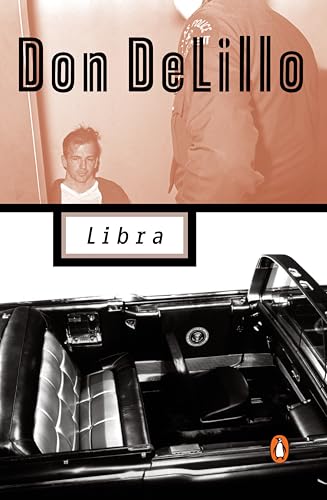
From the author of the National Book Award-winning novel White Noise comes an eerily convincing fictional speculation on the events leading up to the assassination of John F. Kennedy
In this powerful, unsettling novel, Don DeLillo chronicles Lee Harvey Oswald’s odyssey from troubled teenager to a man of precarious stability who imagines himself an agent of history. When “history” presents itself in the form of two disgruntled CIA operatives who decide that an unsuccessful attempt on the life of the president will galvanize the nation against communism, the scales are irrevocably tipped.
A gripping, masterful blend of fact and fiction, alive with meticulously portrayed characters both real and created, Libra is a grave, haunting, and brilliant examination of an event that has become an indelible part of the American psyche.
BUY THE BOOK
Community Reviews
Re-read - have no idea when I first read it, but at least 15+ years ago.
At first blush, you might think this is redundant to a lot of other conspiracy fiction about the JFK assassination, most prominently the Stone film. However, the value of this book comes in the usual way it does with books as compared to movies - in the quiet moments in which you see inside the heads of characters. It almost humanizes Oswald, although in characteristic DeLillo fashion it plays with uncertainty and a certain distance inherent to his narrative style. It is the same sort of style you get in White Noise, but I honestly think this is a superior book because the story is so much more coherent.
The book has a lot of the characteristic DeLillo dialogue too, which for me is not a plus. Characters will often seem to be trading aphorisms or detached observations and witticisms rather than actually talking to each other. It produces very memorable phrases, but verisimilitude is not its strength. It isn't all like that. But most of it. Of course he also just doesn't have a lot of dialogue compared to what you would expect from another author.
But the book also has that feeling that you get from great literature and from conspiracy theories where everything feels connected - you end up underlining like 50% of the sentences. Everything is overdetermined - so much information seems to be important and connect to other info and mean something - and that is actually one of the major themes of the book, so it's all the more enjoyable.
It isn't history, but it may as well be from the viewpoint of the random American individual who sees it all through a TV screen or an internet connection.
Great read.
At first blush, you might think this is redundant to a lot of other conspiracy fiction about the JFK assassination, most prominently the Stone film. However, the value of this book comes in the usual way it does with books as compared to movies - in the quiet moments in which you see inside the heads of characters. It almost humanizes Oswald, although in characteristic DeLillo fashion it plays with uncertainty and a certain distance inherent to his narrative style. It is the same sort of style you get in White Noise, but I honestly think this is a superior book because the story is so much more coherent.
The book has a lot of the characteristic DeLillo dialogue too, which for me is not a plus. Characters will often seem to be trading aphorisms or detached observations and witticisms rather than actually talking to each other. It produces very memorable phrases, but verisimilitude is not its strength. It isn't all like that. But most of it. Of course he also just doesn't have a lot of dialogue compared to what you would expect from another author.
But the book also has that feeling that you get from great literature and from conspiracy theories where everything feels connected - you end up underlining like 50% of the sentences. Everything is overdetermined - so much information seems to be important and connect to other info and mean something - and that is actually one of the major themes of the book, so it's all the more enjoyable.
It isn't history, but it may as well be from the viewpoint of the random American individual who sees it all through a TV screen or an internet connection.
Great read.

See why thousands of readers are using Bookclubs to stay connected.