Isola: Reese's Book Club: A Novel
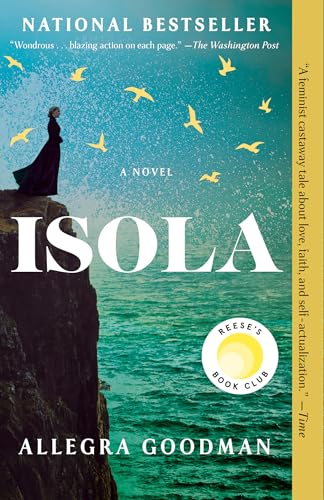
REESE’S BOOK CLUB PICK • NATIONAL BESTSELLER •
A young woman and her lover are marooned on an island in this “lushly painted” (People) historical epic of love, faith, and defiance from the bestselling author of Sam.
BUY THE BOOK
Join a book club that is reading Isola: Reese's Book Club: A Novel!
Community Reviews
What Bookclubbers are saying about this book
✨ Summarized by Bookclubs AI
Readers say *Isola* is a richly detailed, character-driven historical novel based on a true story set in 16th-century France and the New World. Review...

⭐️⭐️⭐️⭐️ I really enjoyed this! The beginning was slow to build, but after finishing (and once reaching the climax of the inevitable marooning) I appreciated the beginning much more as I knew more about how Marguerite was able to save herself. This felt like time travel, for which I’m grateful to the author for achieving, and the vibes were moody, ethereal, foreboding, yet silver lined and redemptive. Marguerite’s story is captivating and moving yet heartbreaking!!
thenextgoodboook.com
What’s it about?
This historical novel is loosely based on the life of Marguerite de la Rocque de Roberval, a sixteenth-century French noblewoman. She was deserted on an island off the coast of Canada sometime in the 1540s and is said to have lived there for two years. In this version, Marguerite is a spoiled and lonely orphan who is totally at the mercy of her male guardian. When he spends all of her inheritance, she has no recourse but to follow him on an expedition to New France.
What did it make me think about?
This story certainly makes you understand how powerless women have been throughout history.
Should I read it?
I find most historical fiction falls into two categories. One category writes a fairly straightforward story that conveys some historical context or story to the reader. The other group of books falls into a more literary category. These books appear to be pieces of literature that incorporate history. I would put this book in the latter category. I read Kaaterskill Falls and The Family Markowitz ages ago, and I remember enjoying them both. I read SAM and reviewed it a couple of years ago, and although I was less enthusiastic, I still enjoyed the book. But this novel felt like a big departure for Allegra Goodman. It was neither a sprawling family drama nor a contemporary story. I am always impressed when an author shows such flexibility. It was not what I expected, but it provided a compelling glimpse into the life of a privileged woman in the mid-1500s. Anyone who enjoys historical fiction is in for a treat.
Quote-
“I knew as little of the chateau’s public rooms as I did of my farms and vineyards, for like all my property, they were mine in name only.”
“I turned to Auguste, and I thought how rare he was to believe and yet to doubt-to entertain both.”
What’s it about?
This historical novel is loosely based on the life of Marguerite de la Rocque de Roberval, a sixteenth-century French noblewoman. She was deserted on an island off the coast of Canada sometime in the 1540s and is said to have lived there for two years. In this version, Marguerite is a spoiled and lonely orphan who is totally at the mercy of her male guardian. When he spends all of her inheritance, she has no recourse but to follow him on an expedition to New France.
What did it make me think about?
This story certainly makes you understand how powerless women have been throughout history.
Should I read it?
I find most historical fiction falls into two categories. One category writes a fairly straightforward story that conveys some historical context or story to the reader. The other group of books falls into a more literary category. These books appear to be pieces of literature that incorporate history. I would put this book in the latter category. I read Kaaterskill Falls and The Family Markowitz ages ago, and I remember enjoying them both. I read SAM and reviewed it a couple of years ago, and although I was less enthusiastic, I still enjoyed the book. But this novel felt like a big departure for Allegra Goodman. It was neither a sprawling family drama nor a contemporary story. I am always impressed when an author shows such flexibility. It was not what I expected, but it provided a compelling glimpse into the life of a privileged woman in the mid-1500s. Anyone who enjoys historical fiction is in for a treat.
Quote-
“I knew as little of the chateau’s public rooms as I did of my farms and vineyards, for like all my property, they were mine in name only.”
“I turned to Auguste, and I thought how rare he was to believe and yet to doubt-to entertain both.”
See why thousands of readers are using Bookclubs to stay connected.