Fahrenheit 451: A Novel
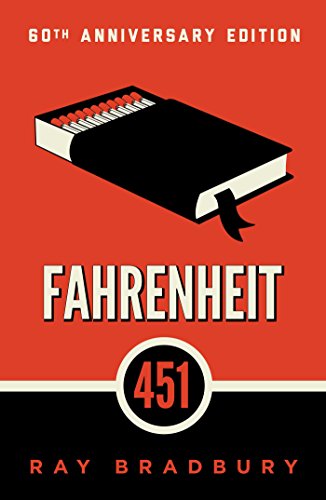
Sixty years after its originally publication, Ray Bradbury’s internationally acclaimed novel Fahrenheit 451 stands as a classic of world literature set in a bleak, dystopian future. Today its message has grown more relevant than ever before.
BUY THE BOOK
Community Reviews
What Bookclubbers are saying about this book
✨ Summarized by Bookclubs AI
Readers say *Fahrenheit 451* remains a gripping dystopian classic praised for its vivid prose and urgent social critique on censorship and intellectua...
It’s been a long time since I read Fahrenheit 451 but I keep trying to slowly re-read some of the classics from the 20th Century. Of course we all remember that the plot involves book burnings. But what I had forgotten was the reason for the burnings and the dissolution of a thinking society. It wasn’t initially some evil empire looking to control people. It was the fault of the populace. Those that didn’t want to have to think, to feel uncomfortable, that only wanted entertainment and to be happy. My timing was perfect as a study came out this week showing that reading for pleasure has dropped 40% in the past 20 years through 2023. Many of the book’s themes feel very prescient today - from the lack of independent thought to the brainwashing ability of TV to the loss of long term focus.
Guy Montag is a fireman. Firemen no longer put out fires, they set them. Namely they set fire to houses with books in them. But one night, after meeting a young woman who dares to be different, he keeps a book rather than consigning it to the flames. The book speaks to the power of the ability of an individual to change things, to touch things in a lasting way.
The actor Tim Robbins narrates the book and does an excellent job with the various voices.

I'm gonna be honest, I did not expect to give this book 5 stars. It's not five stars in the sense that it's perfect but it's five stars in that it's good.
Some of the characterisation sucks and there's a lot to be desired there but this book is very theme driven so I can excuse it I suppose.
Whilst it's meant to be dystopian, I would argue about 80% of it is eerily similar to the modern day world. In the days of ai book summaries so you can say you've read the classics, doomscrolling and social media addictions, and the constant flood of information always in reach, this book is more relevant than ever.
There are so many parts of it that are beautifully written (others maybe not as much) and even in a world gone to hell, there's still hope and people.
I really despise people who over simply this book to "tv bad 😡 books good 😇" because it's quite literally not. If you read the book it explicitly says that it was never about the books—it was about the information inside of them. The same information that can be found in films and music and in people.
Indeed the ending entirely sums this up as the value is held in the information, the ability to think, within people.
The whole plot is that people have stopped thinking. And for that reason, I'm glad that there are people who dislike this book even though it's a classic. I just really don't like that so many people cometely misconstrue the messaging.
It's not anti-tv. It may have been anti-technology at the time because that was what Bradbury saw as the threat to critical thinking. But in the modern day, seeing what technology has become, was that really so wrong? Technology has done good, yes, but has done equal amounts of harm in exchange.
There very much is a subtly pervasive sexism throughout but if I'm being honest I don't think that that's such a big problem all things considered. The 1950s were not the most progressive of timea and this reflects that but even still, I don't think it makes it unreadable.
Overall, a great book.